
When Your Back Is Against
the Wall, We Are Right
There With You
the Wall, We Are Right
There With You
California Criminal Defense and Restraining Order Firm















Last updated March 22, 2026 // Attorney reviewed by Matthew Barhoma
An employer-filed GVRO is a court petition under California Penal Code § 18170 that allows your employer to ask a judge to temporarily remove your firearms, ammunition, and magazines. If your employer has filed a gun violence restraining order against you, you are facing a legal proceeding that could affect your Second Amendment rights, your professional reputation, and your career
Your employer just told you a gun violence restraining order has been filed against you. Maybe you received court papers at work. Maybe HR pulled you aside and said the company petitioned to have your firearms removed. Either way, you are facing a legal proceeding that could strip your Second Amendment rights, damage your professional reputation, and jeopardize your career. You need an employer-filed GVRO defense attorney who understands both California red flag law and employment law. The hearing is coming fast. Every day you wait weakens your ability to build a defense. This page explains exactly what an employer-filed GVRO is, how the process works, what is at stake, and how Power Trial Lawyers fights these petitions across Southern California.
An employer-filed Gun Violence Restraining Order (GVRO) is a civil court order under California Penal Code §§ 18170–18190 that allows an employer to temporarily remove an employee’s access to firearms, ammunition, and magazines if the court finds the employee poses a significant danger of causing personal injury.
Who can file: Employers or authorized representatives (HR, corporate officers, counsel); in some cases, coworkers with employer approval
Standard of proof: Clear and convincing evidence of a “significant danger”
Temporary order: Can be issued ex parte without notice
Hearing deadline: Within 21 days
Duration after hearing: 1 to 5 years
Immediate risk: Firearm surrender, CLETS entry, employment consequences
If your employer filed a GVRO, the case is moving quickly. The hearing—not the filing—determines whether your rights are restricted long-term.
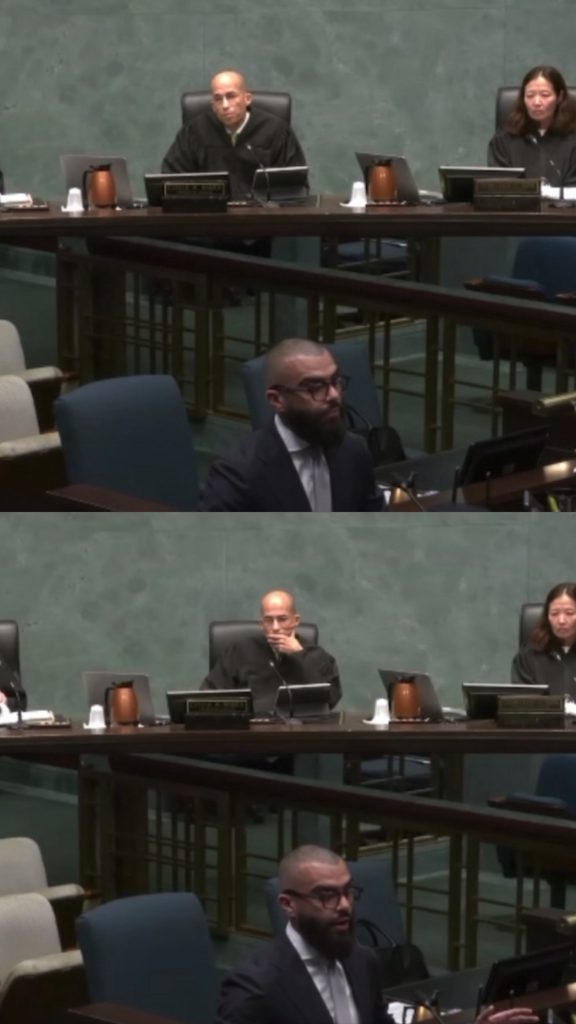
An employer-filed gun violence restraining order is a civil petition under California Penal Code § 18170 that allows an employer to ask a court to prohibit an employee from possessing firearms, ammunition, and magazines. Power Trial Lawyers defends employees who face these petitions in Los Angeles, Orange County, Riverside, San Bernardino, and San Diego.
California expanded GVRO standing in 2020 to include employers and coworkers. Before that, only law enforcement and immediate family members could petition. Now your boss, HR department, or company attorney can initiate a GVRO against you based on alleged workplace conduct or statements.
The employer does not need to prove you committed a crime. The employer does not need to show you threatened anyone directly. The standard is whether you pose a “significant danger” of personal injury to yourself or others if you continue to have access to firearms. That standard leaves room for interpretation, which means employers may file petitions even in situations where the alleged danger is not clear-cut. A defense attorney can challenge whether the employer’s evidence meets this threshold.
An employer-filed GVRO is not a Workplace Violence Restraining Order under Code of Civil Procedure § 527.8. Those are separate proceedings with different rules. A GVRO targets only your firearm rights. A workplace violence restraining order can impose stay-away orders, restrict your movements, and affect your employment more broadly.
These two proceedings are often confused, but they are legally distinct and carry different consequences.
Employers sometimes choose a GVRO as a lower-threshold risk management tool, even when no workplace violence has occurred. That distinction is often critical to the defense.
The employer-filed GVRO process begins when an employer or authorized representative files a petition in California Superior Court under Penal Code § 18170. The court can issue a temporary ex parte order the same day, removing your firearms before you ever appear before a judge. Understanding this timeline is critical for anyone who needs an employer-filed GVRO defense attorney.
The employer files a petition describing the alleged conduct that makes you a danger. Common allegations include statements interpreted as threats, volatile workplace behavior, social media posts about firearms, or reports from coworkers. The petition must identify specific facts, not just general concerns.
A judge can grant a temporary GVRO without your knowledge or presence. Once served with a temporary order, you are generally required to surrender all firearms, ammunition, and magazines within 24 hours of service. The specific timeline depends on the type of order issued. Law enforcement may serve the order at your home or workplace.
Within 21 days of the temporary order, the court holds a full hearing. You have the right to attend, present evidence, testify, and cross-examine witnesses. The employer must prove by clear and convincing evidence that the GVRO is justified. If the court grants the order after the hearing, it can last between one and five years, depending on the circumstances the court considers.
If you fail to appear at the hearing, the court will likely grant the GVRO by default. You will lose your firearms for at least one year. The order will be entered into the CLETS database. And you will have no defense on the record if the employer seeks a renewal.
| Stage | What Happens | Your Risk | What You Should Do |
|---|---|---|---|
| Petition Filed | Employer submits allegations to court | Immediate legal exposure | Do not contact employer about the case |
| Temporary Order | Judge may issue ex parte order | Firearm surrender required | Comply immediately |
| Service | You are formally served | Timeline begins | Contact counsel immediately |
| 21-Day Hearing | Full evidentiary hearing | Long-term restriction risk | Prepare evidence and witnesses |
| Court Decision | Order granted or denied | 1–5 year restriction possible | Evaluate appeal or compliance options |
At the hearing, the court does not rely on generalized fear or workplace discomfort. The judge evaluates specific, recent, and credible evidence.
Common categories include:
However, several types of evidence are frequently overused or misinterpreted:
The court focuses heavily on recency, credibility, and context. A defense strategy often succeeds by exposing exaggeration, bias, or lack of firsthand knowledge.
The hearing determines whether your firearm rights are restricted for years. Preparation—not the initial filing—drives the outcome.
Key steps include:
Many employer-filed GVRO cases turn on context. What the employer presents as a threat is often a misinterpreted workplace interaction when examined in full.
Under Penal Code § 18170, an employer-filed GVRO can be petitioned by any employer or an authorized agent acting on behalf of the employer. This means the petition may come from a corporate officer, HR director, general counsel, or outside attorney retained by the company. A coworker may also petition for a GVRO under California law if statutory requirements are met, including substantial and regular interaction with the subject and, in many cases, employer authorization. The procedural basis differs slightly from employer-filed petitions and should be analyzed carefully in each case.
The employer is not required to have conducted a formal internal investigation before filing. However, the petition must present specific facts—not generalized concerns—that support a finding that the employee poses a significant danger.
This broad standing creates opportunities for misuse. Employers sometimes file GVROs as a risk management strategy rather than in response to genuine threats. Power Trial Lawyers scrutinizes every employer-filed GVRO petition to determine whether the employer had a legitimate basis or overstepped.
An employer-filed GVRO carries severe consequences that extend far beyond losing your firearms for a year. Power Trial Lawyers helps clients understand the full scope of what is at stake when an employer petitions for a gun violence restraining order in California.
You must surrender all firearms, ammunition, and magazines within 24 hours of a temporary order. You can turn them in to law enforcement or transfer them to a licensed firearms dealer for storage. Failure to surrender is a separate criminal offense.
Every granted GVRO is entered into the California Law Enforcement Telecommunications System. This means any law enforcement officer who runs your name will see the active restraining order. The CLETS entry remains for the duration of the order.
An employer-filed GVRO can trigger termination, especially if your job involves security, law enforcement, or any role that requires firearm possession. Even in non-firearm positions, the stigma of a GVRO can lead to reassignment, loss of security clearance, or constructive termination.
If you hold a professional license in California, a GVRO may trigger mandatory reporting or disciplinary review. Security guards, armed private investigators, and individuals with CCW permits face immediate credential consequences.
GVROs appear in certain background check databases. Future employers, landlords, or licensing agencies may discover the order. This can affect your career long after the GVRO expires.
Power Trial Lawyers has seen employer-filed GVRO petitions arise from a wide range of workplace situations. Below are common scenarios where employees find themselves on the receiving end of these petitions in Southern California.
You made a frustrated comment during a stressful meeting. A coworker reported it to HR, and the company interpreted it as a veiled threat. The employer filed a GVRO based on a single remark taken out of context. Defense strategy focuses on the full context of the statement, witness testimony, and your work history.
Your employer fired you or is in the process of terminating your position. To justify the decision or protect against a wrongful termination claim, the employer files a GVRO to paint you as dangerous. Defense strategy examines the timeline of employment actions and the employer’s motive.
You posted photos of a legal hunting trip or a day at the shooting range on social media. A coworker or supervisor flagged the posts to HR. The employer filed a GVRO based on lawful recreational activity. Defense strategy highlights that legal firearm use is constitutionally protected and does not constitute a threat.
You and a coworker had a heated disagreement that did not involve any physical conduct or explicit threats. The employer, exercising caution, filed a GVRO as a risk management measure. Defense strategy challenges the absence of credible threat evidence and the employer’s overreaction to routine workplace conflict.
You disclosed a mental health condition to your employer or used an Employee Assistance Program. The employer used that private health information as a basis for a GVRO petition. Defense strategy may involve challenging the improper use of confidential medical information and raising privacy protections under state and federal law.
The following Judicial Council forms are directly relevant to an employer-filed GVRO proceeding. Understanding these forms helps you and your attorney prepare an effective response.
The employer-filed GVRO defense attorneys at Power Trial Lawyers approach every employer-filed GVRO defense with strategies tailored to the specific facts of the workplace dispute. Our attorneys challenge the employer’s evidence, expose procedural errors, and protect both your gun rights and your career at the hearing.
Employer-filed GVRO petitions often rely on secondhand reports, vague allegations, or interpretations of behavior rather than direct evidence of danger. We examine every statement in the petition. We identify hearsay, inconsistencies, and exaggerations. We gather counter-evidence including your employment record, performance reviews, and witness statements from colleagues who can speak to your character and conduct.
The employer must meet the clear and convincing evidence standard to prove you pose a significant danger. That is a high bar. We force the employer to substantiate every factual claim. Vague discomfort, general anxiety, or speculative fears about firearms do not meet this standard under California law.
Some employers file GVROs to retaliate against employees, to create a paper trail justifying termination, or to deflect liability. We investigate the employer’s motive. If the GVRO petition coincides with a workplace dispute, disciplinary action, or termination, we present that context to the court.
The Second Amendment protects your right to keep and bear arms. An employer’s subjective discomfort with your lawful firearm ownership is not sufficient grounds for a GVRO. We raise constitutional arguments where the petition is based on lawful conduct rather than genuine threatening behavior.
At the hearing, we cross-examine every witness the employer presents. We challenge their personal knowledge, their bias, and their interpretation of events. Many employer-filed GVRO cases rely on one or two witnesses who heard something secondhand. Effective cross-examination can dismantle those claims.
Employer-filed GVRO cases often rely on incomplete narratives, internal workplace dynamics, and risk-averse HR decisions rather than actual evidence of danger. Our defense strategy is built around dismantling those narratives in court.
We focus on:
These hearings are short, evidence-driven, and highly judge-dependent. Precision and preparation—not volume of argument—determine the result.
Yes. Under California Penal Code § 18170, an employer can petition for a temporary GVRO ex parte, meaning without notifying you in advance. You will be served with the temporary order after it is granted. You then have the right to respond and attend the full hearing within 21 days.
Not automatically. A GVRO is a civil court order, not a termination notice. However, if your job requires firearm access or security clearance, the GVRO may make you unable to perform your duties. Some employers use the GVRO filing as a basis for disciplinary action. An attorney from Power Trial Lawyers can advise you on protecting your employment.
The employer must present clear and convincing evidence that you pose a significant danger of causing personal injury to yourself or others by having firearms. This can include statements, behavior, social media posts, or witness accounts. Vague concerns without specific supporting facts should not meet this standard.
Absolutely. You have the right to appear at the hearing, present your own evidence, call witnesses, and cross-examine the employer’s witnesses. This hearing is your primary opportunity to defeat the petition. Power Trial Lawyers prepares clients thoroughly for GVRO hearings across Southern California.
A granted GVRO is entered into the CLETS database and may appear in certain background check searches. This can affect future employment applications, professional licensing, and firearms purchases even after the order expires.
Both can file. Under Penal Code § 18170, employers and their authorized representatives can petition. Under Penal Code § 18175, coworkers can petition independently. The procedural requirements differ slightly, and a defense attorney can explain how each type of petition works.
If granted after a full hearing, an employer-filed GVRO lasts between one and five years. The employer can petition for renewal before the order expires. You have the right to oppose any renewal. You can also petition for early termination if circumstances change.
Yes. If the court denies the employer’s petition at the hearing, the temporary order is dissolved and you can retrieve your surrendered firearms. The process for retrieval depends on whether you stored them with law enforcement or a licensed dealer. Power Trial Lawyers guides clients through the retrieval process.
That evidence may be subject to privacy protections under California’s Confidentiality of Medical Information Act (CMIA), federal statutes such as the ADA, and—where a covered entity is involved—HIPAA. A defense attorney can evaluate which privacy protections apply to your specific situation.
Potentially. If the employer filed the GVRO in bad faith, as retaliation, or based on knowingly false information, you may have grounds for a civil claim. This is a separate legal action from defending the GVRO itself. Power Trial Lawyers can evaluate whether your situation supports additional legal remedies.
Yes. HR departments, corporate officers, or company counsel can file on behalf of the employer under Penal Code § 18170.
Yes. GVROs are civil proceedings. No arrest or criminal charge is required.
Yes. Employers frequently rely on posts involving firearms or statements they interpret as threatening, even if the activity was lawful.
It can. Security clearances, guard cards, CCW permits, and certain regulated professions may be impacted.
Relevant communications, witness testimony, employment records, and any evidence that provides context to the allegations.
Power Trial Lawyers defends employees facing employer-filed GVRO petitions in courthouses across all five Southern California counties. Our attorneys know the local procedures, judicial tendencies, and filing requirements at each location. When your employer files a GVRO, where the case is heard matters.
Employer-filed GVRO cases in Los Angeles County are heard at the courthouse serving the respondent’s residence or the employer’s business location. Key courthouses include the Stanley Mosk Courthouse in downtown LA, the Van Nuys Courthouse for the San Fernando Valley, the Pasadena Courthouse for the San Gabriel Valley, and the Torrance Courthouse for the South Bay.
Orange County GVRO hearings are typically handled at the Central Justice Center in Santa Ana or the Lamoreaux Justice Center in Orange. North County cases may be assigned to the North Justice Center in Fullerton.
Riverside County employer-filed GVRO cases are heard at the Riverside Historic Courthouse, the Southwest Justice Center in Murrieta, or the Larson Justice Center in Indio for the Coachella Valley.
In the Inland Empire, employer-filed GVRO hearings take place at the San Bernardino Justice Center, the Rancho Cucamonga Courthouse, or the Victorville Courthouse for High Desert cases.
San Diego employer-filed GVRO cases are heard at the Central Courthouse downtown, the Vista Courthouse for North County, or the Chula Vista Courthouse for South County.
An employer-filed GVRO is not a routine workplace issue—it is a fast-moving legal proceeding with long-term consequences for your firearm rights, employment, and record.
These cases are often built on incomplete or exaggerated workplace narratives. The hearing is your only opportunity to challenge those claims before a judge.
What matters most is:
Waiting weakens your position. Early, strategic action is critical.
If your employer has filed a gun violence restraining order against you, your firearms, your career, and your reputation are all at risk. The hearing timeline is short and the consequences of an unprepared defense are severe.
Power Trial Lawyers has defended employees against employer-filed GVROs across every major Southern California courthouse. Attorney Matthew Barhoma and our legal team understand the intersection of California red flag law and employment disputes. We build aggressive, evidence-driven defenses that hold employers accountable for the claims they bring to court.
Call 888-808-2179 today for a free consultation. You can also reach us through our website. Do not wait for the hearing date to act. The earlier you engage a defense attorney, the stronger your position at the hearing.