- Free Consultation: (888) 808-2179 Tap Here to Call Us
















How a San Diego Restraining Order Lawyer Beat the San Diego Police Department in a Gun Violence Restraining Order Trial


By Matthew Barhoma, Esq. | Power Trial Lawyers | San Diego Restraining Order Defense
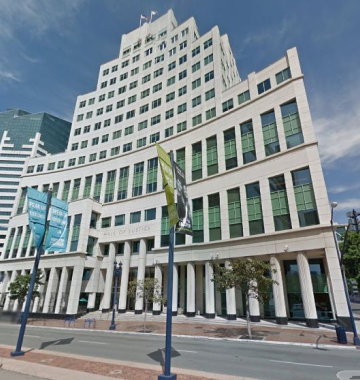
On the morning of September 14, 2026, in Department C-61 of the San Diego Superior Court at the Hall of Justice, 330 West Broadway, the San Diego Police Department asked a judge to strip a San Diego resident of his right to own a firearm for up to five years. The Police Department was represented by the Office of the San Diego City Attorney. Our client had been served with a temporary gun violence restraining order less than a month earlier. He came to Power Trial Lawyers days before his hearing, with no response on file and the full weight of a government petitioner lined up against him.
The court denied the petition. No gun violence restraining order was issued. Nothing was entered into CLETS. Our client walked out of the Hall of Justice with his Second Amendment rights intact.
This post walks through that case using only what appears on the court’s public Register of Actions and in California’s gun violence restraining order statute. We keep our client’s personal circumstances private. But the procedural history, the courthouse, the department, the judge, the petitioner, and the outcome are all matters of public record, and they tell an important story about how a San Diego restraining order lawyer defends a gun violence restraining order case and wins.
What Is a Gun Violence Restraining Order in California?
A gun violence restraining order, commonly called a GVRO or a “red flag” order, is a civil court order under California Penal Code sections 18100 through 18205 that prohibits a person from owning, possessing, purchasing, or receiving firearms, ammunition, and magazines. Unlike a domestic violence restraining order or a civil harassment restraining order, a GVRO does not require that the respondent have harmed or threatened any particular person. The theory of the statute is preventive: the petitioner asks the court to find that the respondent poses a significant danger of causing personal injury to himself or others by having access to firearms.
California was one of the first states in the country to adopt this framework, and San Diego has been one of the most aggressive jurisdictions in using it. The San Diego City Attorney’s Office has publicly built a program around gun violence restraining orders, and the San Diego Police Department has a dedicated unit that files petitions. When a GVRO case is filed in San Diego County, the respondent is not facing a frightened family member with a form. He is facing a police department, a detective, and a deputy city attorney who handles these cases every week.
Who can file a GVRO petition?
Under Penal Code section 18150, a law enforcement officer may file a petition for a gun violence restraining order. The statute has been expanded over the years so that immediate family members, employers, coworkers, and school employees may also petition under Penal Code section 18150(a)(2). In the case discussed here, the petitioner was the San Diego Police Department itself, and the filing detective was assigned to the department’s gun violence response unit.
The three stages of a GVRO case
A GVRO case in San Diego Superior Court moves through up to three stages:
- Temporary emergency GVRO. An officer can obtain a 21-day emergency order from an on-call judge, often by phone, under Penal Code section 18125, when there is an immediate and present danger.
- Ex parte temporary GVRO. Under Penal Code section 18150, a petitioner files a Petition for Gun Violence Restraining Order (Judicial Council form GV-100) and asks the court to issue a temporary order without notice to the respondent. The standard at this stage is a “substantial likelihood” that the respondent poses a significant danger in the near future. Judges grant these routinely on the petitioner’s declaration alone.
- GVRO after hearing. Under Penal Code section 18175, the court holds a noticed hearing at which the petitioner must prove, by clear and convincing evidence, that the respondent poses a significant danger of personal injury to self or others by having firearms and that a GVRO is necessary because less restrictive alternatives have been tried and found ineffective, or are inadequate or inappropriate under the circumstances. If granted, the order lasts between one and five years and can be renewed.
The hearing is where the case is actually decided. The temporary order is issued on paper; the final order is fought over in a courtroom. That is where Power Trial Lawyers does its work.
The Case: San Diego Police Department v. Respondent, No. 26CU043757C
The public Register of Actions maintained by the San Diego Superior Court lays out the procedural history of this matter. The case was filed on August 18, 2026 as a civil petition, case type “Petition: Gun Violence,” in the Central Division and assigned to Department C-61. The petitioner is listed as the San Diego Police Department, represented by Deputy City Attorney Nora Smyth of the Office of the San Diego City Attorney, 1200 Third Avenue, Suite 1100, San Diego, California 92101.
The petition and temporary order — August 18, 2026
On August 18, 2026, the San Diego Police Department filed six documents in a single day: a Notice of Case Assignment, a Petition for Gun Violence Restraining Order, a Civil Case Cover Sheet, a Notice of Court Hearing (Gun Violence Prevention), and a Temporary Gun Violence Restraining Order. The temporary order was signed the same day by Judge Chandra S. Reid. That is how fast a GVRO moves: the petition is filed in the morning, and by the end of the day the respondent is a prohibited person under California law, even though he has not yet been told a case exists.
The temporary order, on Judicial Council form GV-110, does three things immediately. It prohibits the respondent from owning, possessing, purchasing, or receiving any firearm, ammunition, or magazine. It orders the respondent to relinquish any firearms and ammunition he has, either to law enforcement or to a licensed dealer, within 24 hours of service under Penal Code section 18120. And it sets a hearing date at which the court will decide whether to issue a longer order.
Personal service — August 27, 2026
The Register of Actions shows that a Proof of Personal Service was filed on August 27, 2026. From that point, the clock was running. The respondent had a hearing set for 9:00 a.m. on September 14, 2026 in Department C-61, along with an Order to Show Cause on the same calendar. He had the right to file a Response to Petition for Gun Violence Restraining Order (form GV-120) and to appear and contest the petition. But like most people served with a GVRO, he had no lawyer, no experience with the statute, and no idea what evidence the court would actually require.
Substitution of counsel
Matthew Barhoma substituted in as counsel of record on September 13, 2026, one day before the hearing. No response had been filed. The petitioner had been building its case for a month. This is not the timeline any restraining order lawyer wants, but it is the timeline our clients frequently bring us, and it is precisely why a firm that tries these cases matters. A GVRO hearing is decided on the evidence and the statute, not on how many pages the response runs. The question for us was simple: could the San Diego Police Department carry its burden under Penal Code section 18175?
The hearing — September 14, 2026, Department C-61
At 9:00 a.m. on September 14, 2026, the matter was called in Department C-61 at the San Diego Hall of Justice. Deputy City Attorney Nora Smyth appeared for the San Diego Police Department. Matthew Barhoma appeared for the respondent. The case was contested and tried on the merits.
What the Court Decided
The court denied the San Diego Police Department’s petition for a gun violence restraining order. The temporary gun violence restraining order that had been in place since August 18, 2026 was dissolved. No order after hearing was issued, and therefore nothing was transmitted to the California Department of Justice or entered into the California Restraining and Protective Order System.
For our client, the practical meaning of that ruling is the point of this entire post. Consider what he avoided.
Why a Denied GVRO Matters: CLETS, the DOJ, and the Second Amendment
People sometimes assume a gun violence restraining order is a minor civil matter, a piece of paper that expires. It is not. A GVRO issued after hearing carries consequences that reach far beyond the courtroom.
Entry into CLETS and CARPOS
Under Penal Code section 18115, every gun violence restraining order — temporary or after hearing — is transmitted to the California Department of Justice and entered into the California Restraining and Protective Order System (CARPOS), which runs on the California Law Enforcement Telecommunications System, better known as CLETS. Once an order is in CLETS, every peace officer in the state who runs the respondent’s name sees it. Every firearms dealer who submits a Dealer Record of Sale sees a denial. The respondent is flagged in the Armed and Prohibited Persons System, and the DOJ’s APPS enforcement teams can come to his home to seize firearms.
A temporary GVRO is entered into that system too, but it expires and is removed when the case ends without a final order. A GVRO after hearing stays in CLETS for the life of the order, one to five years, and can be renewed indefinitely as long as the petitioner keeps coming back. That is what the San Diego Police Department was asking the court for on September 14, 2026, and that is what our client avoided.
Criminal exposure
Under Penal Code section 18205, a person who possesses a firearm or ammunition while subject to a gun violence restraining order commits a misdemeanor and becomes prohibited from owning firearms for an additional five years after the order expires. A GVRO also creates a paper trail that prosecutors and police will use in any future encounter. A police contact that would otherwise end with nothing becomes a felon-in-possession-style investigation the moment the officer sees an active order in CLETS.
Employment, licensing, and security clearances
Restraining orders are discoverable in background checks that pull court records and DOJ records. A GVRO after hearing can affect employment in law enforcement, security, and defense contracting, professional licensing, and any position that requires a clearance or a firearms endorsement. A denied petition, by contrast, is a closed civil case with no order against the respondent.
The constitutional dimension
The right to keep and bear arms is an enumerated constitutional right. Since the United States Supreme Court’s decisions in New York State Rifle & Pistol Association v. Bruen (2022) and United States v. Rahimi (2024), courts across the country have been asked to reconcile red flag laws with the Second Amendment. California’s statute has survived so far, in large part because it builds in a clear and convincing evidence standard and a requirement that the court consider less restrictive alternatives. Those protections mean nothing unless the respondent’s lawyer holds the petitioner to them. At Power Trial Lawyers, we treat every GVRO hearing as a constitutional proceeding, because it is one.
How a San Diego Restraining Order Lawyer Defends a GVRO Case
Every gun violence restraining order case is different, and we do not disclose our client’s specific circumstances here. But the framework we used in Department C-61 is the same framework that governs every GVRO hearing in San Diego County, and it is worth explaining in detail for anyone who has been served with a petition.
1. Hold the petitioner to the clear and convincing evidence standard
Penal Code section 18175(b) requires the petitioner to prove two things by clear and convincing evidence: first, that the respondent poses a significant danger of causing personal injury to himself or another by having a firearm, and second, that a GVRO is necessary to prevent that injury because less restrictive alternatives have been tried and found ineffective, or are inadequate or inappropriate for the circumstances. “Clear and convincing” is a high standard. It requires evidence so clear as to leave no substantial doubt. It is not the preponderance standard used in most civil cases, and it is far more than the “substantial likelihood” standard that got the temporary order signed.
Government petitioners frequently build their cases as though the temporary order standard applies at the hearing. Our job is to make the court apply the right one.
2. Attack the statutory factors one by one
Penal Code section 18155(b) lists the evidence the court must consider and the evidence the court may consider. The mandatory factors include a recent threat or act of violence directed toward self or another, a violation of a domestic violence emergency protective order within the past six months, a pattern of violence or threats within the past 12 months, and a conviction for an offense that would prohibit firearm possession. The discretionary factors include reckless use or display of a firearm, prior firearms violations, recent acquisition of firearms or ammunition, and substance abuse. Each factor has a time window, a definitional requirement, and an evidentiary foundation. A skilled restraining order lawyer goes through the petition line by line and asks whether each allegation actually fits the statute, whether it is hearsay, whether it is within the time window, and whether it is supported by competent evidence.
3. Prove that less restrictive alternatives exist
The second prong of section 18175(b) is the one petitioners most often neglect. The court cannot issue a GVRO simply because it would be safer if the respondent did not have guns. The court must find that less restrictive alternatives were tried and failed, or would be inadequate or inappropriate. Voluntary safe storage, transfer of firearms to a third party, ongoing treatment or support, and the respondent’s own demonstrated conduct after the temporary order was served are all evidence that a less restrictive alternative exists. Presenting that evidence affirmatively is one of the most effective tools a GVRO defense attorney has.
4. Cross-examine the petitioning officer
In a police-filed GVRO, the petition rests on a detective’s declaration. The detective was usually not a percipient witness to anything. The declaration summarizes what other people said, what other officers wrote, and what records reflect. At a contested hearing, that officer can be cross-examined on the basis for every statement, on what he did not investigate, on what he did not ask, and on what he does not know. Hearsay objections, foundation objections, and the rules of evidence apply in a GVRO hearing, and a petitioner who has never been made to comply with them can find that the case looks very different under oath than it did on paper.
5. Present the respondent as a person, not a file
The court sees dozens of these petitions. The petitioner’s file makes the respondent look like a risk score. Our client is a human being with a life, relationships, responsibilities, and a record of conduct that the court is entitled to weigh. Whether through the respondent’s own testimony, declarations from family and colleagues, or documentary evidence of the respondent’s circumstances, a trial lawyer’s job is to give the judge a complete picture and a principled basis to deny the order.
The San Diego GVRO Landscape: What Respondents Are Up Against
San Diego is not a typical jurisdiction for gun violence restraining orders. The San Diego City Attorney’s Office has, by its own public accounts, filed more GVRO petitions than any other agency in California and has trained law enforcement agencies across the state on the program. The San Diego Police Department has a unit that focuses on these cases. GVRO petitions in the City of San Diego are filed in the Central Division of the San Diego Superior Court at the Hall of Justice, 330 West Broadway, and are heard in the civil departments, including Department C-61.
For a respondent, this means the petitioner is experienced, well-resourced, and comfortable in the courtroom. It also means the judges who hear these cases have seen the City Attorney’s presentation many times. A respondent who shows up alone, or with a lawyer who does not try restraining order cases, starts at a serious disadvantage. A respondent who shows up with a San Diego restraining order lawyer who knows the statute, knows the courtroom, and is prepared to try the case is a different matter entirely.
Power Trial Lawyers handles restraining order matters throughout San Diego County, including the Central Division downtown, the North County Division in Vista, the East County Division in El Cajon, and the South County Division in Chula Vista. We defend gun violence restraining orders, domestic violence restraining orders, civil harassment restraining orders, workplace violence restraining orders, and elder abuse restraining orders, and we represent petitioners as well as respondents.
What to Do If You Have Been Served With a Gun Violence Restraining Order in San Diego
If a San Diego police officer or sheriff’s deputy has served you with a temporary gun violence restraining order, the next few days determine the outcome of your case. Here is what we tell every client who calls us.
- Comply with the temporary order immediately. Relinquish your firearms and ammunition as ordered, within 24 hours, and get a receipt. Possessing a firearm while a temporary GVRO is in effect is a crime under Penal Code section 18205 and will be the first thing the petitioner raises at the hearing.
- Do not contact the petitioning officer or try to explain. Anything you say to the detective goes into a supplemental declaration.
- Calendar the hearing date. It is on the Notice of Court Hearing, form GV-109. If you do not appear, the court can issue the order in your absence.
- Gather your evidence. Documents, messages, witnesses, and records that show your actual circumstances.
- Call a restraining order lawyer who tries these cases. Not a general practitioner. Not a lawyer who will “negotiate” a stipulated order. A trial lawyer who will make the San Diego Police Department prove its case by clear and convincing evidence.
It is never too late to fight a GVRO. Our client in Case No. 26CU043757C retained us the day before his hearing, and the petition was denied. But every day of preparation helps, and the best time to call is the day you are served.
Why Choose Power Trial Lawyers for San Diego Restraining Order Defense
Power Trial Lawyers is the trade name of Barhoma Law, P.C., a California litigation firm led by Matthew Barhoma, Esq. The firm’s practice is built around restraining order litigation, criminal defense, and post-conviction relief, and it tries restraining order cases in courthouses across Southern California, including San Diego, Los Angeles, Orange, Riverside, and San Bernardino Counties.
The name is not a slogan. Restraining order hearings are trials: witnesses testify, evidence is admitted or excluded, lawyers cross-examine, and a judge makes findings. Most respondents lose GVRO hearings not because the facts are against them but because no one made the petitioner meet its burden. Matthew Barhoma has spent his career doing exactly that, and the result in San Diego Police Department v. Garcia Lopez is one example of what that approach produces.
When you call Power Trial Lawyers about a San Diego gun violence restraining order, you speak with a firm that knows the statute, knows the San Diego City Attorney’s GVRO program, knows the Hall of Justice, and has stood in Department C-61 and won.
Frequently Asked Questions About Gun Violence Restraining Orders in San Diego
At the hearing on a gun violence restraining order, the petitioner must prove by clear and convincing evidence, under Penal Code section 18175(b), that the respondent poses a significant danger of causing personal injury to self or others by having a firearm and that a GVRO is necessary because less restrictive alternatives are inadequate. For a temporary ex parte order, the lower standard of a “substantial likelihood” applies.
A temporary emergency GVRO lasts 21 days. An ex parte temporary GVRO lasts until the hearing, which the statute contemplates within 21 days. A GVRO issued after hearing lasts between one and five years, at the court’s discretion, and can be renewed.
Yes. Every GVRO is transmitted to the California Department of Justice and entered into CLETS through the California Restraining and Protective Order System. The court case itself is a public civil record. If the petition is denied, no order is entered and nothing remains in CLETS after the temporary order expires.
Yes. A police-filed GVRO is a civil petition like any other. The respondent has the right to file a response on form GV-120, to appear at the hearing, to present evidence and witnesses, to cross-examine the petitioning officer, and to be represented by a lawyer. In San Diego Police Department v. Garcia Lopez, Case No. 26CU043757C, Power Trial Lawyers contested a petition filed by the San Diego Police Department and the court denied it.
GVRO petitions filed in the City of San Diego are heard in the Central Division of the San Diego Superior Court at the Hall of Justice, 330 West Broadway, San Diego, California 92101, in the civil departments, including Department C-61. Petitions arising in other parts of the county may be heard in Vista, El Cajon, or Chula Vista.
Most GVRO petitions in the City of San Diego are filed by the San Diego Police Department and prosecuted by the Office of the San Diego City Attorney, which operates a dedicated gun violence restraining order program. Family members, employers, coworkers, and school employees may also file.
When a petition is denied, the temporary order expires. Firearms surrendered to law enforcement are returned under the procedures in Penal Code section 18120 and the Department of Justice’s Law Enforcement Gun Release process, which requires a DOJ eligibility check before release. Your lawyer can help you navigate that process.
Fees depend on the type of order, whether the case is contested, and how much preparation is required. Power Trial Lawyers offers a consultation to review your petition and your hearing date and explain your options before you commit to anything.
Contact a San Diego Restraining Order Lawyer Today
If you have been served with a gun violence restraining order, a domestic violence restraining order, a civil harassment restraining order, or any other protective order in San Diego County, the hearing date on your notice is the most important date on your calendar. Power Trial Lawyers defends restraining order cases in the San Diego Superior Court every week, and we know how to make the petitioner prove its case.
Contact Power Trial Lawyers to speak with a San Diego restraining order lawyer about your case. Your rights, your record, and your future are worth defending.
This article is attorney advertising and general legal information; it is not legal advice and does not create an attorney-client relationship. Past results do not guarantee future outcomes. Every case depends on its own facts.