- Free Consultation: (888) 808-2179 Tap Here to Call Us



















Restraining Order and Visitation: Will You Still See Your Kids Before the Hearing and Over the Holidays?


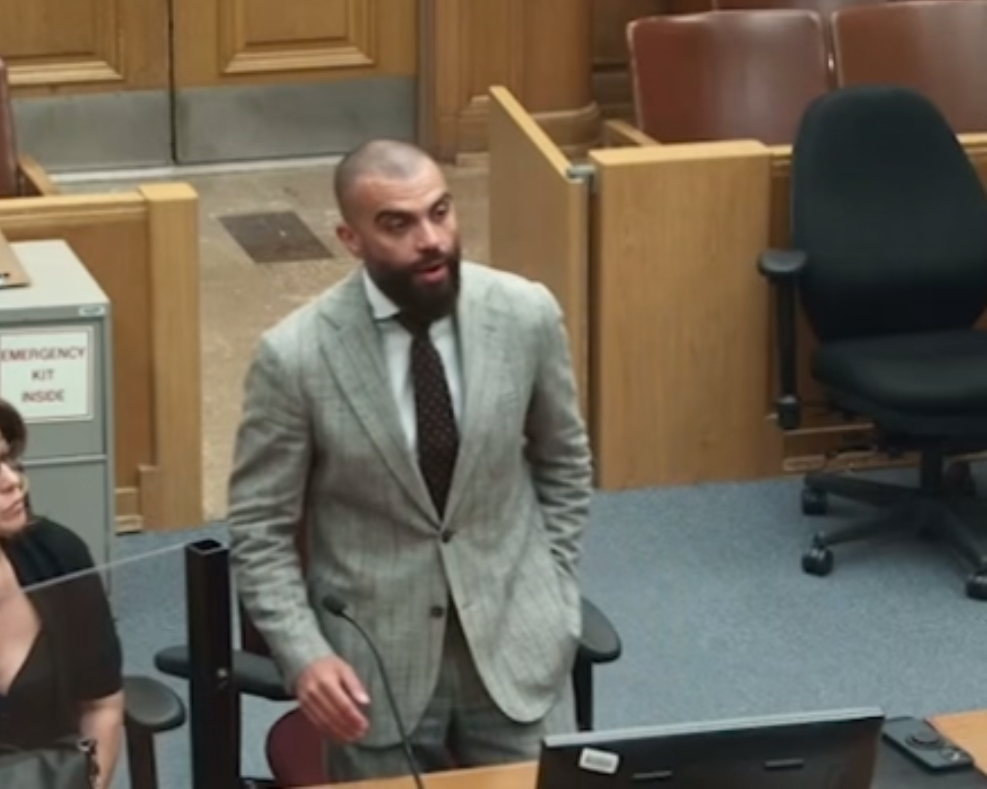
Quick answer: Once you receive a domestic violence temporary restraining order, that order sets your restraining order and visitation rights until the hearing. Find the item titled “Child Custody and Visitation” on form DV-110. “Not requested” means the order does not change custody. Still, every no-contact and stay-away term applies. “Denied until the hearing” means the judge refused to change custody before the hearing. “Granted” means form DV-140 now controls when, where and how you see your children. It may even allow no visits. In every case, follow the order exactly. Then file forms DV-120 and DV-125 before the hearing. Finally, ask the judge for a specific schedule that includes the holidays.
A temporary order usually lasts about three weeks. However, those weeks can fall on Thanksgiving, Hanukkah, Christmas or New Year’s. We wrote this guide for the parent who received the papers, not the parent who filed them. It explains what the papers mean and what you may and may not do. It also shows how to win a restraining order and visitation schedule the court will enforce.
By Matthew Barhoma, founding attorney, Power Trial Lawyers. Last updated November 2026.

Key takeaways on restraining order and visitation rights
- The temporary order controls your restraining order and visitation rights from the moment you receive it.
- Read the child custody item on the DV-110 and every page of any attached DV-140.
- A temporary order can change an existing custody order only in limited cases. The judge must find immediate harm to the child or a risk the child will leave California (Family Code section 3064).
- If the order lists your children as protected people, you cannot contact them. That includes texts, video calls, gifts and messages through relatives.
- Never arrange visits, holiday plans or exchanges directly with the protected parent unless the written order allows it.
- File form DV-120. Also attach form DV-125 if the other parent asked for custody or visitation orders. There is no court fee to file a response.
- Ask for a specific schedule that names holidays, exchange times and exchange places (Family Code section 6323).
- Supervised or virtual visitation is better than no visitation. So, ask for it in writing as a fallback.
- If the judge grants the restraining order after a hearing, Family Code section 3044 can presume against your custody for five years. That is why the hearing is often the custody case.
What a restraining order and visitation order can say about your kids
Judges issue domestic violence restraining orders under the Domestic Violence Prevention Act. As part of the case, the judge can also make child custody and visitation orders. First, these orders can appear in the temporary restraining order (form DV-110). Later, they can appear again in the restraining order after hearing (form DV-130). In both cases, the details go on form DV-140, Child Custody and Visitation Order.
Custody has two parts. Legal custody is the right to make decisions about health, school and welfare. Physical custody decides where the children live. Visitation, which the forms also call parenting time, is the schedule for the other parent. Together, restraining order and visitation terms can give the other parent sole custody. They can also limit you to supervised visitation or allow no visitation until the hearing.
Police enforce these orders, and a violation is a crime. In addition, the custody and visitation parts can outlast the restraining order itself. Custody and support orders from a domestic violence case do not end automatically when the protective order expires.
Read the child custody item on your DV-110 first
The fastest way to understand your restraining order and visitation position is to find the child custody item on the temporary order. On the DV-110, the judge checks one of three boxes for custody and visitation. The table below explains what each box means for you right now.
| What the DV-110 says | What it means today | What you should do |
|---|---|---|
| Not requested | The other parent did not ask for custody orders. The temporary order does not change custody, but no-contact and stay-away terms still apply. | Do not contact the other parent to arrange visits. Instead, ask the court to set exchange terms. |
| Denied until the hearing | The judge refused to change custody before the hearing. Any existing order still matters, but every exchange must respect the stay-away terms. | Read the existing custody order next to the restraining order. Then ask a lawyer how exchanges can happen lawfully, such as through a third party. |
| Granted on DV-140 | The DV-140 now controls custody and visitation until the hearing. It may allow visits, supervised visits or no visits. | Follow the DV-140 word for word. If it allows no visits, do not try to see the children. Instead, prepare your request for the hearing. |
Next, check whether the DV-110 lists your children as protected people. If it does, you cannot contact them in any way unless the order makes an exception. That rule applies even if the DV-140 says nothing. It also applies when the children reach out to you first.
Restraining order and visitation before the hearing: can you see your kids?
Sometimes yes, and sometimes no. It depends entirely on what the temporary order says. First, a judge can make temporary restraining order and visitation orders without hearing from you. The petitioner asks for them on form DV-105, and the judge decides based on the written request.
Second, a temporary order has limits. It cannot take away custody under an existing order unless the judge finds immediate harm to the child. An immediate risk that the child will leave California also qualifies (Family Code section 3064). According to the Judicial Council’s domestic violence restraining order bench guide, immediate harm includes recent domestic violence. A continuing pattern of domestic violence also counts.
In practice, many temporary orders give the petitioner temporary custody. They then either suspend visitation or require supervision until the hearing. So, if your temporary order allows visits, you can see your kids on the exact terms written in it. If it allows no visits, you cannot see them before the hearing. Finally, if it says nothing about custody, you still cannot use a visit as a reason to approach the protected parent.
Existing custody orders: which restraining order and visitation terms control?
Many parents already have a custody order from a divorce, a parentage case or a custody petition. Often, a restraining order and visitation request arrives in the middle of that case. When both exist, read them together. A later temporary order that changes custody controls during its term.
Furthermore, a family court order does not give you permission to violate a stay-away order. If following one order would break the other, stop. Then get legal advice before the next exchange.
A criminal protective order adds another layer. If police also arrested you, the criminal court may have issued its own order under Penal Code section 136.2. Any later family court custody or visitation order must acknowledge that the criminal protective order takes priority for enforcement. Our guide to criminal protective orders explains how to ask for a change that allows court-ordered visits.
When parentage is not established
Parentage matters here. Some parents never married the other parent, never signed a voluntary declaration of parentage, and never obtained a parentage judgment. In that case, the court may not treat you as a legal parent yet. As a result, the judge can give the other parent temporary sole custody. The judge can also order no visitation until a court establishes parentage (Family Code section 6323). Therefore, unmarried parents should raise parentage early. Bring proof, such as a signed declaration or a prior court order.
Holiday restraining order and visitation rules
Holidays make every restraining order and visitation problem harder. Courts close on court holidays, and family gatherings bring both sides together. Meanwhile, children expect to see both parents. Nevertheless, the temporary order does not pause for Thanksgiving, Christmas, New Year’s, a birthday or a school break.
Holiday visitation under a restraining order: what you can and cannot do
| Situation | Usually allowed? | Why |
|---|---|---|
| Visiting your children at the times and place the DV-140 lists | Yes | The court ordered it. So, arrive on time, follow every exchange term, and leave when the visit ends. |
| Texting the other parent to “swap” Christmas Eve for Christmas Day | No | Contact with the protected person violates most temporary orders, even when the message is polite. |
| Going to a family party where the protected parent will be | No, if it puts you inside the stay-away distance | The stay-away order applies everywhere, including relatives’ homes, churches and school events. |
| Sending gifts through grandparents | Only if the children are not protected people and the order allows contact | If the order protects the children, gifts and messages through others count as contact. |
| A video call with the kids on Christmas morning | Only if the order allows it | Virtual visitation is a recognized option. However, the order must say so. |
| Taking the kids out of state for a holiday trip | Only if the order allows it | Temporary custody orders often restrict travel. The judge can also add an order to prevent child abduction on form DV-145. |
| Posting about the case or the other parent online | Risky | Posts can become evidence of harassment. They can also violate no-contact terms. |
How to ask for holiday visitation in a restraining order case
The right way to get holiday time is through the court, in writing. First, list each holiday you want in your form DV-125 response. Include dates, times and exchange places. Then, propose a fallback. For example, ask for supervised time on Christmas Eve. Alternatively, ask for a video call on Christmas morning.
Finally, ask for exchanges at a neutral public place or a supervised exchange center. A named third party can also handle exchanges. That way, you never deal with the other parent directly.
Judges prefer specific schedules. In fact, Family Code section 6323 requires these orders to specify the time, day, place and manner of transfer. Likewise, the bench guide discourages vague orders such as “reasonable visitation.” As a result, a detailed holiday proposal makes it easier for the judge to say yes.
Will the court hear an emergency request over the holidays?
Courts close on court holidays, and calendars fill up before them. In addition, each county runs its own emergency (ex parte) calendar. Each county also sets its own notice rules and filing deadlines. Judges reserve emergency requests for real emergencies, so this tool does not fit every holiday dispute. Instead, talk to a lawyer if a holiday falls before your hearing. Together, you can decide whether an earlier hearing, an agreed schedule or an emergency request fits your case.
Should you continue the restraining order hearing if visitation is on hold?
This is one of the hardest restraining order and visitation decisions a parent makes. Under Family Code section 245, the respondent generally has a right to one continuance to respond to the petition. A continuance can buy time to gather evidence, find witnesses or hire a lawyer. It can also let a related criminal case move first.
However, the temporary order usually stays in effect until the continued hearing. So, if the temporary order allows no visits, a continuance can mean more weeks without your children. It can even cost you a holiday. On the other hand, the statute lets the court change the temporary order when it grants a continuance. Therefore, if you need more time, ask in the same request for interim visitation, supervised visits or video calls.
| Option | Benefit | Cost to your time with the kids |
|---|---|---|
| Go forward on the original date | Fastest path to a final restraining order and visitation ruling | None, but you may have less time to prepare |
| Ask for a continuance only | More time to build the defense | The temporary order, including any no-visit terms, usually continues |
| Ask for a continuance plus interim visitation | More time and some contact with the children | Depends on whether the judge agrees to change the temporary order |
How to answer a restraining order and visitation request: DV-120 and DV-125
You answer a restraining order and visitation request with written forms. File them before the hearing. The California courts’ form DV-125 page lists it as the Response to Request for Child Custody and Visitation Orders. It attaches to form DV-120, the main response.
There is no court fee to file either form. After you file, another adult must serve a copy on the other parent. That person must be at least 18 and cannot be you. Then you file proof of that service.
| Form | What it does | When you need it |
|---|---|---|
| DV-120 | Your response to every order the petitioner requested on form DV-100 | Always, if you want the judge to see your side in writing |
| DV-125 | Your response to the custody and visitation requests on form DV-105, including the schedule you want | When the petitioner asked for child custody or visitation orders |
| MC-025 or a typed declaration | Your sworn account of what happened, with exhibits | Almost always, because this is where you tell your story |
| FL-150 | Income and expense declaration | When the petitioner asks for child support or spousal support |
| DV-250 | Proof of service by mail | After someone mails your response to the other parent |
For a deeper walk-through of the main response, see our guide to form DV-120.
What to put in your DV-125
- Whether you agree or disagree with each custody and visitation order the other parent requested.
- The legal and physical custody arrangement you want, and why it serves the children.
- A specific visitation schedule, with days, times and exchange places.
- A holiday schedule for the next few months. Include Thanksgiving, winter break, Christmas Eve, Christmas Day, New Year’s and birthdays.
- Your fallback: supervised visits, supervised exchanges or video calls.
- Facts that show you are an involved parent, such as school pickups, doctor visits and coaching.
Evidence that helps at a restraining order and visitation hearing
Judges decide custody and visitation based on the best interest of the child. So, your evidence should do two things. First, it should show that the abuse claims are untrue or overstated. Second, it should show that time with you is good for your children.
Useful evidence often includes text threads and emails. Calendars that show who handled school and medical care also help. In addition, consider photos, report cards and letters from teachers or coaches. Witnesses who have seen you parent can also testify.
Be careful with evidence that involves the children. Do not ask your kids to write letters, testify or take sides. Judges see that as pressure on the children, and it can hurt your case. For more on building the hearing record, read how to beat a domestic violence restraining order in California.
What the judge decides about restraining order and visitation at the hearing
At the hearing, the judge decides two connected questions. First, did the petitioner prove abuse by a preponderance of the evidence? Second, what custody and visitation orders serve the children?
If the judge denies the restraining order, the temporary order ends. Even so, a family law case may still need to resolve custody. On the other hand, if the judge grants the restraining order, the judge also makes custody and visitation orders on form DV-140. Those orders can last well beyond the hearing.
Supervised, suspended or virtual visitation
When the judge grants a restraining order, the court must consider four options for your parenting time. The court can suspend it, deny it, supervise it or make it virtual (Family Code section 3100). Virtual visitation means contact through video or other audiovisual tools. A supervisor may or may not take part.
Supervised visitation can use a professional provider, who charges a fee. Alternatively, it can use a nonprofessional provider, such as a relative the court approves. Professional providers need training, a background check and mandated-reporter status. Also, the court order must say who pays.
Providers often have limited openings around the holidays. So, line up two or three options before the hearing. That way, you can name one right away if the judge orders supervision.
Why Family Code 3044 turns the hearing into a custody case
A domestic violence restraining order granted after a hearing usually triggers Family Code section 3044. The statute creates a rebuttable presumption against giving the restrained parent sole or joint custody. The presumption covers both legal and physical custody, and it runs for five years.
You can rebut the presumption. To do so, the court must weigh the statutory factors and make findings on each one. Those factors include completing a batterer’s intervention program and obeying the restraining order. The child’s best interest also matters.
Still, rebutting the presumption takes time and work. That is why the best time to protect custody is at the restraining order hearing itself. For the long-term picture, read our article on rebutting the Family Code 3044 presumption. Our page on DVRO custody rights also explains each stage.
The court must explain its custody findings
California now requires judges to explain certain custody decisions in domestic violence cases. Sometimes a judge gives a restrained parent custody or unsupervised visits despite abuse allegations. In that situation, the judge must state reasons in writing or on the record.
Since January 1, 2026, courts record those findings on form DV-150, Mandatory Findings for Child Custody and Visitation Order. For a respondent, this means a well-prepared record matters. So, give the judge facts that support the findings you need.
Mediation and child custody recommending counseling
Many courts send parents to Family Court Services before deciding a contested custody issue. There, a counselor holds mediation or child custody recommending counseling. In domestic violence cases, the parent alleging abuse can ask for separate sessions. As a result, you may never sit in the same room as the other parent.
Treat this meeting as part of the hearing. Stay calm and focus on the children. Also, bring your proposed restraining order and visitation schedule, including the holidays.
Restraining order and visitation mistakes that cost parents time
- Contacting the other parent about the holidays. Even a friendly text can violate the order. It can also lead to restraining order violation charges.
- Showing up at school, daycare or practice. Stay-away orders often list schools and childcare sites. So, read the order before you go anywhere your children might be.
- Using the children as messengers. Passing a message through a child can violate the order. It also hurts your credibility with the judge.
- Ignoring the forms. If you skip DV-125, the judge may adopt the other parent’s schedule.
- Agreeing to an order “just to get it over with.” An agreed restraining order can still affect custody. Therefore, talk to a lawyer before you agree to anything.
- Skipping the hearing. If you do not appear, the judge can grant the restraining order and the custody orders by default.
- Keeping firearms. A temporary order usually requires you to surrender firearms within 24 hours of service. A violation hurts both your defense and your custody case.
Restraining order and visitation when you also face a criminal case
Many restraining orders follow an arrest. If you face criminal charges, the prosecution can use your written response and your hearing testimony. Indeed, the Sacramento County Superior Court warns restrained parties about this risk. Its guidance says that responding while a criminal matter is pending can waive your right to remain silent.
This creates a real conflict for parents. On one hand, you want to tell the judge why you should see your children. On the other hand, what you say can affect the criminal case. For that reason, a lawyer should help you decide whether to testify and what to put in writing. A lawyer can also decide whether to ask for a continuance until the criminal case moves forward.
Our page on a restraining order hearing with a pending criminal case explains the strategy in detail.
2027 changes that affect restraining order and visitation cases
Two new laws take effect on January 1, 2027. Both matter to parents on the receiving end of a petition. First, AB 1657 amends Family Code sections 6300 and 6326. Under it, courts cannot require a petitioner to warn you before asking for an emergency domestic violence restraining order. As a result, more parents will learn about the case, and any temporary custody orders, only when they receive the papers.
Second, AB 561 lets a party or witness appear remotely at the hearing on a protective order petition. It also bars the superior court from charging a fee for the remote appearance. That change can help a parent who works out of town. It can also help a witness who supports your parenting take part.
Southern California courts that hear restraining order and visitation disputes
Each county handles restraining order and visitation cases a little differently. In Los Angeles County, family law departments at courthouses across the county hear these cases. Examples include Stanley Mosk, Long Beach, Van Nuys, Pasadena, Chatsworth and Pomona. In Orange County, the Lamoreaux Justice Center in Orange hears most domestic violence restraining orders.
Riverside County, San Bernardino County and San Diego County each assign cases by region. Each county also runs its own Family Court Services and remote-appearance rules. So, check your county’s rules early, because supervised visitation providers and holiday closures vary by location. The Power Trial Lawyers restraining order defense team appears in these courts every week.
A 7-step plan for the first week after you receive the papers
- Read every page. Find the hearing date on DV-109, the custody item on DV-110, and any DV-140 or DV-145 attachments.
- Follow the order immediately. Move out if ordered, stay away, and stop all contact, including through friends and social media.
- Surrender firearms. Meet the deadline on the order and file proof with the court.
- Write down your parenting history. List routines, school and medical involvement, and people who can speak to your parenting.
- Collect evidence. Save texts, emails, photos and calendars.
- Draft your DV-120 and DV-125. Include a specific schedule, a holiday plan and a supervised or virtual fallback.
- Talk to a restraining order lawyer. Decide on a continuance, the criminal case and your hearing strategy before the response deadline.
If your hearing is close, read what to do when your restraining order hearing is this week.
Frequently asked questions about restraining order and visitation
Can I see my kids if a restraining order is filed against me?
It depends on the order. If the temporary order gives the other parent custody and allows no visits, you cannot see your children until the judge changes it. If it allows visits, you can see them only on the exact terms in form DV-140. Also, if the order does not address custody, you still cannot contact the protected parent to arrange visits.
Does a temporary restraining order automatically take away custody?
No. A temporary restraining order changes custody only if the petitioner asked for custody orders and the judge granted them. In addition, a judge cannot change an existing custody order without notice unless the child faces immediate harm or an immediate risk of removal from California.
What does “denied until the hearing” mean on my DV-110?
It means the judge refused to make temporary custody and visitation orders before the hearing. Instead, the judge will decide custody at the hearing. Until then, you must still obey every no-contact and stay-away term.
Can I call or text my children before the hearing?
Only if the order does not protect the children and allows contact. If the DV-110 lists your children as protected people, any call, text, video chat or gift violates the order. Messages through someone else also count.
How do I ask for visitation if the other parent asked for no visits?
File form DV-125 with your DV-120 response. Say that you disagree with the request, and propose a specific schedule. Then list a fallback, such as supervised or virtual visitation, and bring evidence of your parenting to the hearing.
Can I get holiday visitation while a restraining order case is pending?
Yes, if the judge orders it. So, ask for a written holiday schedule in your DV-125 and at the hearing. Include dates, times, exchange places and a supervised or virtual option. Do not try to arrange holiday time directly with the protected parent.
Will a continuance delay my visitation?
Usually, yes. The temporary order stays in effect until the continued hearing unless the judge changes it. Therefore, if you need more time, also ask the judge to allow interim visitation.
What is supervised visitation, and who pays for it?
Supervised visitation means another adult attends your visits. The supervisor can be a paid professional or an approved nonprofessional, such as a relative. The court order must say who pays, and professional providers charge fees.
Can the judge order video calls instead of in-person visits?
Yes. When a judge grants a domestic violence restraining order, the court must consider whether to suspend, deny, supervise or make parenting time virtual. Virtual visitation uses video or other audiovisual tools.
Do custody and visitation orders end when the restraining order expires?
Not automatically. Custody, visitation and support orders from a domestic violence restraining order case can continue after the protective order ends. So, you may need to file a request to change them.
How long does the Family Code 3044 presumption last?
The presumption lasts five years after a finding of domestic violence, such as a restraining order granted after a hearing. However, you can try to rebut it sooner by proving the statutory factors and the child’s best interest.
Can I take my children out of state for the holidays?
Only if the order allows it. Temporary custody orders often limit travel. The judge can also restrict travel with an order to prevent child abduction on form DV-145. So, get written court permission before you plan any trip.
What happens if the other parent invites me to a holiday dinner?
Do not go unless the order allows that contact. The order binds you, not the protected parent. As a result, accepting an invitation can still be a violation, and the invitation is not a defense.
Do I need a lawyer to protect my time with my kids?
The law does not require one. Still, the hearing decides the restraining order and, often, custody for years. A lawyer can prepare your DV-125, present your parenting evidence and cross-examine the petitioner. A lawyer can also protect you if there is a related criminal case.
Talk to a lawyer about your restraining order and visitation case
Your restraining order hearing may be the most important custody hearing you ever attend. Power Trial Lawyers defends parents in domestic violence restraining order cases across Southern California. We appear in Los Angeles, Orange, Riverside, San Bernardino and San Diego counties.
We prepare the response and build the record. Then we fight for a schedule that keeps you in your children’s lives, including the holidays. Call (888) 808-2179 or contact us online to talk about your case.
Not sure you need a lawyer? Read do you need a lawyer for a restraining order hearing.
Legal authorities referenced
- Continuances and extended temporary orders: Family Code section 245.
- Custody presumption after a domestic violence finding: Family Code section 3044.
- Limits on emergency custody changes: Family Code section 3064.
- Visitation when a protective order exists: Family Code section 3100.
- Custody and visitation orders in domestic violence cases: Family Code section 6323.
- Judicial Council guidance: Domestic Violence Restraining Order Bench Guide.
- Respondent’s custody form: DV-125, Response to Request for Child Custody and Visitation Orders.
- Court findings form: DV-150, Mandatory Findings for Child Custody and Visitation Order.