- Free Consultation: (888) 808-2179 Tap Here to Call Us



















PC 242 Battery Charge in Orange County With a Pending Green Card or Citizenship Application: How Judicial Diversion Protects Your Status


The 60-Second Answer
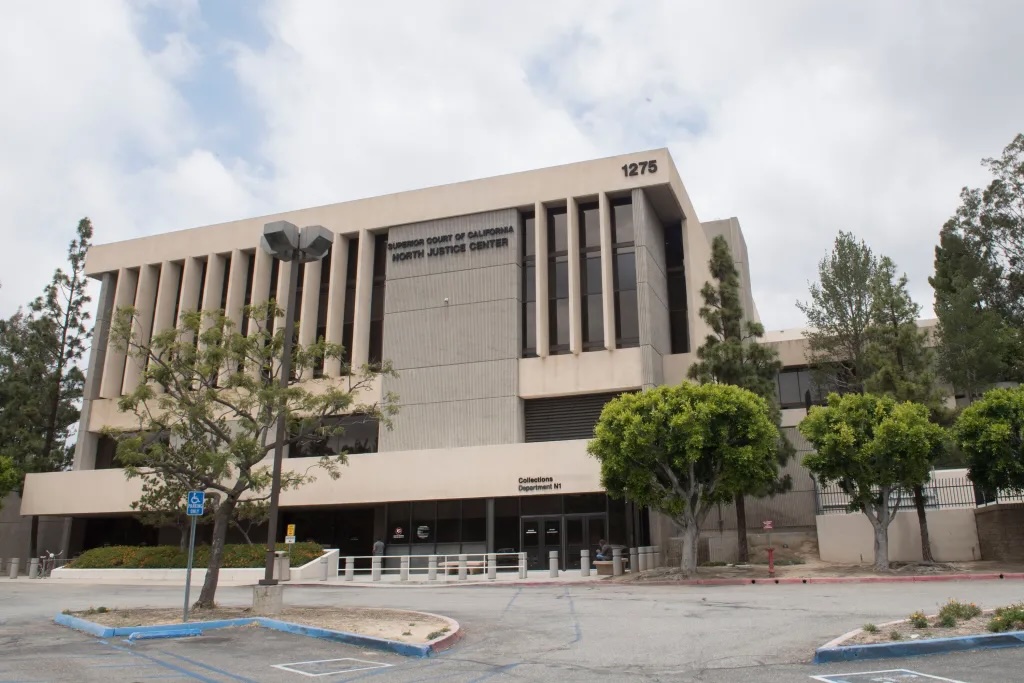
If you are a lawful permanent resident with a pending N-400 application for U.S. citizenship and you have been charged with simple battery under California Penal Code § 242 in Orange County, your immigration future likely depends less on whether you are convicted and more on how the case is resolved. Under federal immigration law, a “conviction” requires either a formal judgment of guilt or, where adjudication is withheld, both an admission of facts sufficient for guilt and the imposition of some form of punishment (8 U.S.C. § 1101(a)(48)(A)). Judicial diversion under California Penal Code § 1001.95 — available for most misdemeanors at the discretion of the court — requires neither. No plea is entered. No admission is made. The case is held open while the defendant complies with court-ordered conditions, and upon completion it is dismissed and deemed to have never occurred. For an LPR whose naturalization is on hold pending the criminal case, this is the single cleanest non-trial outcome California law provides. We recently obtained exactly this disposition for a client at the North Justice Center in Fullerton.
Why a PC 242 Battery Charge Stalls Naturalization Even When It Is Not a “Deportable” Offense
California Penal Code § 242 defines simple battery as “any willful and unlawful use of force or violence upon the person of another.” It is a misdemeanor punishable by up to six months in county jail and a $2,000 fine. In the criminal court system, it sits on the lower end of the seriousness scale.
In the immigration system, the analysis is more complicated.
A simple battery conviction under PC 242 is generally not a “crime involving moral turpitude” (CIMT) under Ninth Circuit precedent, because the statute lacks any aggravating mental state or aggravated injury element. It is also not a categorical “crime of domestic violence” under INA § 237(a)(2)(E)(i) — that provision requires both a qualifying domestic relationship between defendant and victim and the use or attempted use of physical force against that person, and PC 242 itself contains no domestic-relationship element. So in most cases, a PC 242 conviction will not, by itself, render an LPR deportable.
That sounds reassuring. It should not be.
Naturalization is governed by a different and broader standard: good moral character during the statutory period, under INA § 316(a) and 8 C.F.R. § 316.10. USCIS does not need to find that an offense is a CIMT, an aggravated felony, or a deportable offense in order to deny citizenship. It needs only to find that the applicant has not established good moral character — and a battery conviction during the relevant period (typically the five years before filing the N-400, or three years for spouses of U.S. citizens) creates a rebuttable presumption against good moral character that is very difficult to overcome.
There is also a separate procedural problem. USCIS routinely holds an N-400 in abeyance while criminal charges are pending. A pending PC 242 case can stall a naturalization application indefinitely. Even after the criminal case resolves, USCIS typically schedules the naturalization interview months later, and the form of disposition is scrutinized closely.
For an LPR with a pending N-400, the goal therefore is not simply to “win” the criminal case in the colloquial sense. The goal is to obtain a disposition that (1) does not constitute a “conviction” under federal immigration law and (2) does not require any admission of the underlying conduct. PC 1001.95 judicial diversion accomplishes both.
What “Conviction” Actually Means Under Federal Immigration Law
Under 8 U.S.C. § 1101(a)(48)(A), a “conviction” for federal immigration purposes is defined as:
a formal judgment of guilt of the alien entered by a court or, if adjudication of guilt has been withheld, where — (i) a judge or jury has found the alien guilty or the alien has entered a plea of guilty or nolo contendere or has admitted sufficient facts to warrant a finding of guilt, and (ii) the judge has ordered some form of punishment, penalty, or restraint on the alien’s liberty to be imposed.
This definition has two important consequences for criminal defense strategy in immigration-impacted cases.
First, it captures dispositions that look like wins under state law but count as convictions under federal law. California’s older “deferred entry of judgment” (DEJ) under PC 1000 is the classic example: the defendant pled guilty, the plea was held in abeyance, and the case was dismissed upon completion. State law treated this as no conviction. Federal immigration law treated it as a conviction the moment the plea was entered, because both prongs — admission of guilt plus imposition of conditions — were satisfied.
Second, and more importantly for our purposes, any disposition that avoids both prongs is, structurally, not a conviction. PC 1001.95 judicial diversion is designed to do exactly that.
This is the core insight that distinguishes effective crimmigration defense from ordinary criminal defense. Two clients facing the same charge can receive superficially similar outcomes — case dismissed after a year of compliance — and one can be deportable or denied citizenship while the other walks away clean. The difference lies entirely in the procedural mechanics of the disposition, not in its surface description.
PC 1001.95 Judicial Diversion Explained
California Penal Code § 1001.95, enacted in 2021, gives a judge the discretion — even over the prosecution’s objection — to divert a defendant charged with a misdemeanor. The mechanics are straightforward:
The court takes the case off the conviction track and places the defendant on a period of diversion not to exceed 24 months. The court imposes terms it deems appropriate, which can include counseling, community service, restitution, no-contact orders, payment of fines and fees, completion of a batterer’s intervention or anger management program, and periodic compliance review hearings. No plea is entered. No factual admission is made. The defendant is not adjudicated guilty. Upon successful completion, the criminal action is dismissed, and under the statute the arrest “shall be deemed to have never occurred” for most state-law purposes.
PC 1001.95 expressly excludes certain offenses at subsection (e): domestic violence under PC 273.5, stalking under PC 646.9, sex offenses requiring registration under PC 290, and a handful of others. Simple battery under PC 242 is not on the exclusion list and is therefore eligible.
The feature that matters most for immigration purposes is in subsection (a): the court grants diversion without requiring a plea. Compare this to the alternatives:
- PC 1000 drug diversion historically required a guilty plea; it has since been restructured but remains limited to specified drug offenses.
- PC 1001.36 mental health diversion does not require a plea, but it does require the court to find by a preponderance that the defendant suffers from a qualifying mental disorder and that the disorder was a significant factor in the commission of the offense — factual findings that can have collateral consequences.
- Older deferred entry of judgment statutes required a plea.
- Probation under PC 1203 requires a conviction by definition.
PC 1001.95 is the cleanest of all of them. No plea. No admission. No factual findings adverse to the defendant. The case is parked while the defendant earns the dismissal through compliance.
Why PC 1001.95 Is the Strongest Disposition for an LPR With a Pending N-400
For an LPR whose naturalization is being held up by a pending PC 242 charge, the analysis runs like this:
The federal immigration “conviction” test fails outright. Because no plea is entered and no admission is made, the first prong of 8 U.S.C. § 1101(a)(48)(A) is never satisfied. There is no conviction for federal immigration purposes — not now, not ever, regardless of how the case ultimately resolves on the state-court docket.
There is no “admission” of CIMT-type conduct. Some immigration consequences attach to formal admissions of conduct constituting a CIMT even without a conviction, under INA § 212(a)(2)(A)(i)(I). Because PC 1001.95 requires no admission, this trap is avoided.
The good moral character analysis improves dramatically. USCIS still considers the underlying arrest in its discretionary GMC analysis, but the absence of a conviction, combined with successful completion of court-ordered conditions, supports rather than undermines the showing. An LPR who completed a court-supervised diversion — including counseling, community service, and restitution — is presenting evidence of accountability without the weight of a conviction.
The N-400 disclosure stays clean. The applicant must still disclose the arrest on the N-400. Never lie on the form — material misrepresentation on a naturalization application is itself a basis for denial and, in some cases, denaturalization. But the answer to “have you ever been convicted of a crime” remains, accurately and lawfully, no.
The eventual record can be sealed. A PC 1001.95 case dismissed after successful diversion can typically be sealed under PC 851.91 as an arrest “deemed not to have occurred,” removing it from most public-facing background checks.
This combination is why we push hard for PC 1001.95 in immigration-sensitive battery cases. Probation with a suspended sentence — even a “good” probation deal — leaves a conviction on the record that USCIS will treat as such. Trial is high-risk and high-cost. PC 1001.95 splits the difference: the client takes responsibility through compliance with conditions, the court receives accountability, and the conviction never enters the picture.
How Judicial Diversion Motions Are Litigated at the North Justice Center in Fullerton
The Orange County Superior Court has four justice centers that handle criminal misdemeanors: Central (Santa Ana), North (Fullerton), West (Westminster), and Harbor (Newport Beach). Misdemeanor cases are venue’d based on where the alleged offense occurred. The North Justice Center handles cases from north Orange County cities including Fullerton, Anaheim, Brea, Buena Park, Cypress, La Habra, La Palma, Placentia, and Yorba Linda.
A few procedural notes that matter when bringing a PC 1001.95 motion at the North Justice Center.
Timing. PC 1001.95 motions are typically brought at or shortly after arraignment, before any plea is entered. A not-guilty plea does not foreclose the motion, but a guilty or no-contest plea destroys its immigration value the moment it is entered. Defense counsel needs to be involved before arraignment to do this properly.
The DA’s role. The Orange County District Attorney’s Office routinely opposes PC 1001.95 motions. That opposition does not control the outcome — the statute vests discretion in the court — but the motion needs to be substantively persuasive. Boilerplate motions with thin mitigation get denied.
The mitigation package. A persuasive PC 1001.95 motion typically includes a clean criminal history report; declarations from the defendant’s family, employer, community members, and clergy where applicable; evidence of voluntary services already completed (anger management, counseling, community service hours); a restitution plan if appropriate; and a memorandum that addresses each of the discretionary factors a judge will consider. For immigration-impacted defendants, the motion should also include a declaration from immigration counsel explaining what the immigration consequences of any non-diversion disposition would be. Judges respond to specificity. “This client is an LPR” is not enough. “This client’s N-400 has been pending since [date], a non-diversion disposition will trigger denial under [statute], and the family of three U.S. citizen children depends on his ability to naturalize” is what moves the needle.
The hearing. Judges at North Justice Center generally take these motions seriously and rule based on the strength of the showing. The hearing is your one shot. Counsel should be prepared to address the specific facts of the alleged offense, the defendant’s accountability, the protection of any alleged victim, and the public interest in diverting the case.
The conditions. Expect 12 to 24 months of diversion with conditions tailored to the case: completion of an anger management or batterer’s intervention program, community service hours, restitution, no-contact orders where applicable, and fines and fees. Compliance is monitored through periodic review hearings, and the court has the authority to terminate diversion and reinstate the criminal proceeding if the defendant fails to comply.
Mistakes That Destroy Diversion Eligibility for Immigration-Impacted Defendants
Even when PC 1001.95 is technically available, defendants — and sometimes defense counsel without crimmigration experience — make moves that take it off the table or compromise its immigration value:
Entering any plea before exploring diversion. Once a guilty or no-contest plea is on the record, the first prong of the federal “conviction” definition is triggered. A subsequent dismissal does not undo the immigration consequences.
Accepting an early “good deal” before retaining counsel. Self-represented defendants at arraignment are often offered a quick plea to a reduced charge with a short summary probation. For a U.S. citizen, that may be a reasonable trade. For an LPR, it can be a disaster.
Stipulating to a factual basis. Some negotiated dispositions ask the defendant to stipulate to a factual basis. For immigration purposes, that stipulation is an admission and can carry consequences even without a formal conviction.
Missing the diversion window. PC 1001.95 motions are most effective early in the case. Waiting until the eve of trial often means the court has already calibrated its expectations against a different disposition.
Failing to flag the immigration issue to defense counsel. If you are an LPR, a visa holder, or anyone other than a U.S. citizen, your criminal defense lawyer needs to know on day one. The strategy in your case is fundamentally different from the strategy in a citizen’s case. Under Padilla v. Kentucky, 559 U.S. 356 (2010), criminal defense counsel has a Sixth Amendment obligation to advise non-citizen clients of the immigration consequences of a plea — but advice is not the same as defense strategy built around the immigration outcome.
The Outcome We Recently Obtained
We recently represented a lawful permanent resident with a long-pending N-400 application who had been charged with simple battery under PC 242 in Orange County. The case was venue’d to the North Justice Center in Fullerton.
Working in coordination with the client’s immigration counsel, we built and filed a PC 1001.95 motion supported by a comprehensive mitigation package. The court granted diversion. No plea was entered. No admission of guilt was made. Upon successful completion of the diversion period, the case will be dismissed and deemed to have never occurred.
For the client, this means the answer to “have you ever been convicted of a crime” on the N-400 remains, accurately and lawfully, “no.” The pending criminal case that had been freezing the naturalization application is on track to resolve. The path to U.S. citizenship is open again.
We share this outcome — without identifying details, and with the client’s privacy fully preserved — because it illustrates a principle that applies to many of the LPRs and visa holders who walk into our office: the right disposition is not always the one that looks best on its face. It is the one that protects the life you are building.
Frequently Asked Questions
Is simple battery under PC 242 a crime of moral turpitude?
Generally no. Under Ninth Circuit precedent, California simple battery under Penal Code § 242 is not categorically a crime of moral turpitude because it does not require any aggravating mental state or aggravated injury. The underlying conduct can still be considered by USCIS in the discretionary good moral character analysis for naturalization, and other immigration consequences may apply depending on the applicant’s status and history. Always consult immigration counsel.
Will a PC 242 battery conviction make me deportable?
A simple PC 242 conviction is generally not, by itself, a deportable offense for a lawful permanent resident. It is not categorically a crime of moral turpitude, not an aggravated felony, and not a categorical “crime of domestic violence” under INA § 237(a)(2)(E)(i) unless the victim has a qualifying domestic relationship. That said, even non-deportable convictions can derail naturalization, so the analysis does not end with deportability.
Does judicial diversion count as a conviction for immigration purposes?
PC 1001.95 judicial diversion does not count as a conviction under federal immigration law. The federal definition at 8 U.S.C. § 1101(a)(48)(A) requires either a formal judgment of guilt or, where adjudication is withheld, both an admission of facts sufficient for guilt and the imposition of punishment. PC 1001.95 requires neither — no plea is entered and no admission is made — so neither prong is satisfied.
Can USCIS deny my citizenship application because of a pending criminal case?
USCIS typically does not adjudicate an N-400 while a criminal case is pending. Adjudication is held in abeyance until the criminal matter is resolved, and the form of disposition then becomes central to the good moral character analysis. A pending case can effectively stall naturalization indefinitely, which is why resolving the criminal case the right way is critical.
What is PC 1001.95 judicial diversion?
PC 1001.95 is a California statute, enacted in 2021, that gives a misdemeanor court the discretion to divert a defendant — even over the prosecution’s objection — for a period of up to 24 months. No plea is required. The court imposes conditions tailored to the case. Upon successful completion, the case is dismissed and deemed never to have occurred.
What misdemeanors are eligible for PC 1001.95 judicial diversion?
Most California misdemeanors are eligible. The statute excludes domestic violence under PC 273.5, stalking under PC 646.9, registerable sex offenses under PC 290, and a handful of other specified offenses. Simple battery under PC 242 is not on the exclusion list and is therefore eligible.
Can I get judicial diversion if the District Attorney opposes it?
Yes. PC 1001.95 vests discretion in the court, not the prosecution. The DA’s opposition is one factor the judge considers, but it is not dispositive. A well-prepared motion supported by strong mitigation can prevail over DA opposition.
Do I have to disclose the arrest on my N-400 even if the case is dismissed?
Yes. The N-400 requires disclosure of all arrests, charges, and detentions, regardless of disposition. Failure to disclose is itself a basis for denial and, in some cases, denaturalization after the fact. The conviction question on the form is separate, and a PC 1001.95 dismissal allows that question to be answered “no” with full legal accuracy.
How long does PC 1001.95 diversion last?
The statute caps diversion at 24 months. Many cases resolve in a shorter period — 12 to 18 months is common — depending on the charge, the conditions imposed, and the defendant’s compliance.
Should I just plead guilty to a reduced charge to get the case over with?
For a U.S. citizen, that calculation often favors taking a quick plea. For a lawful permanent resident or visa holder, a guilty or no-contest plea — even to a reduced charge — can trigger immigration consequences that take years to undo, if they can be undone at all. Always consult criminal defense counsel who understands the immigration framework before entering any plea.
Where is my Orange County battery case heard if I was arrested in Fullerton?
Misdemeanor battery cases arising in Fullerton, Anaheim, Brea, Buena Park, Cypress, La Habra, La Palma, Placentia, or Yorba Linda are venue’d to the North Justice Center in Fullerton, located at 1275 N. Berkeley Avenue.
Can I seal my record after a PC 1001.95 dismissal?
Yes. After a successful PC 1001.95 dismissal, the arrest and case can typically be sealed under PC 851.91 as an arrest “deemed not to have occurred,” removing the record from most public-facing background checks.
If You Are Facing a Battery Charge in Orange County and Your Immigration Status Is on the Line
If you are a green card holder, visa holder, or anyone with non-citizen status who has been charged with battery under PC 242 — or any other misdemeanor — in Orange County, the disposition of your case can have consequences that extend far beyond the criminal court. The right defense strategy is the one that protects both your liberty today and the immigration future you have spent years building.
We focus on cases that sit at this intersection. Consultations are free and confidential.
Call us at 888-808-2179 to schedule a consultation a Southern California criminal defense lawyer today.
About the Author
Matthew Barhoma is a restraining order and criminal defense attorney serving all of Orange County, California.
Disclaimer
This article is provided for general informational purposes only and does not constitute legal advice. Reading or interacting with this content does not create an attorney-client relationship. Every case is different, and the application of law to your specific facts requires consultation with a qualified attorney. Prior results do not guarantee a similar outcome. This communication may be considered attorney advertising under the California Rules of Professional Conduct.