
When Your Back Is Against
the Wall, We Are Right
There With You
the Wall, We Are Right
There With You
California Criminal Defense and Restraining Order Firm

















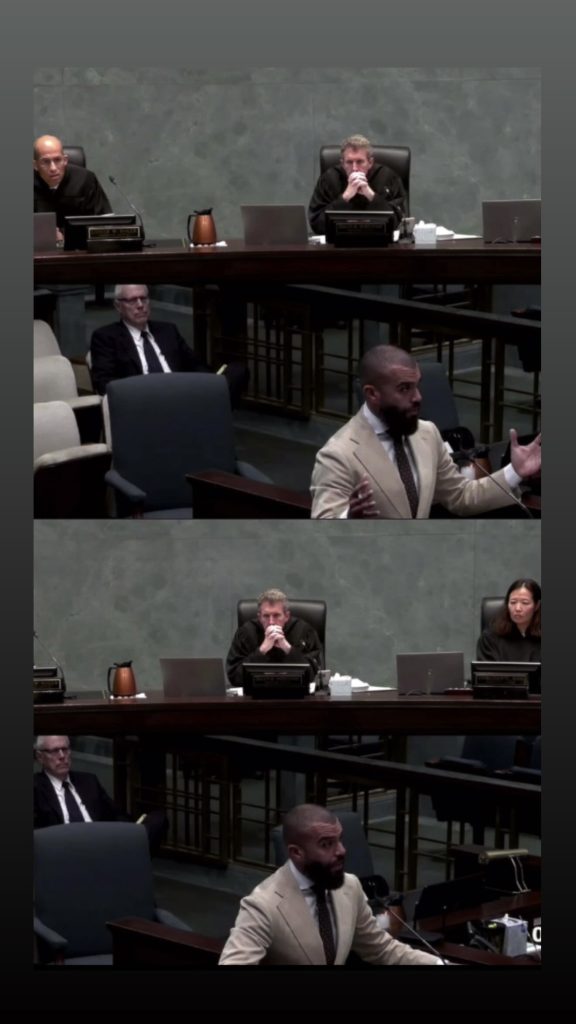
Our California criminal appeals team represented the appellant in this case and successfully obtained reversal of the trial court’s denial of Penal Code 1172.75 resentencing. We filed the opening appellate brief, challenged the trial court’s abuse of discretion, and secured an order vacating the sentence and remanding the case for a new resentencing hearing consistent with Senate Bill 483 and section 1172.75.
Statewide Appellate Practice — Sentencing Appeals, Penal Code 1172.75, SB 483
In People v. Riley (2025) B340040, the California Court of Appeal, Second Appellate District, Division Eight, reversed a trial court’s denial of resentencing under Penal Code section 1172.75 and vacated the defendant’s 40-year sentence. This appellate decision underscores a fundamental principle in California criminal appeals: trial courts cannot refuse to apply retroactive sentencing relief simply because a sentence resulted from a plea agreement.
The case demonstrates the critical intersection between criminal appeals practice and statutory resentencing law. When the Los Angeles County Superior Court denied Steven Riley’s petition for resentencing under Penal Code 1172.75—enacted by Senate Bill 483—it stated that this was a serious case settled by a plea bargain and saw no reason to upset the negotiated plea. The California Court of Appeal found this reasoning legally insufficient and remanded the matter with instructions to conduct a full resentencing hearing without being constrained by the original plea agreement.
This appellate victory illustrates why families seeking relief from outdated sentence enhancements turn to experienced California criminal appeals lawyers who understand both the substantive law governing resentencing and the procedural standards that govern appellate review. The Riley decision provides a roadmap for challenging trial court denials of Penal Code 1172.75 petitions throughout California’s appellate districts.
Case Name: People v. Steven Lamar Riley
Case Number: B340040
Court: California Court of Appeal, Second Appellate District, Division Eight
Trial Court: Los Angeles County Superior Court (Case No. BA304492-01)
Original Sentence: 41 years in state prison (reduced to 40 years by trial court after striking one-year prior prison term enhancement)
Appellate Result: Sentence vacated, order reversed, remanded for resentencing in accordance with Penal Code section 1172.75
Key Legal Issue: Whether a trial court may refuse to exercise discretion at a Penal Code 1172.75 resentencing hearing based solely on the existence of a plea agreement
Holding: Plea agreements do not insulate defendants from retroactive sentencing reform legislation. Trial courts must conduct individualized resentencing hearings and cannot categorically refuse relief based on plea bargains.
You can view the full appellate opinion successfully argued and litigated by attorney Matthew Barhoma here:
Understanding the distinction between trial court resentencing petitions and criminal appeals is essential for anyone navigating California’s complex postconviction relief landscape. Many families mistakenly believe that once a trial court denies a resentencing petition under Penal Code 1172.75, SB 483, or other retroactive legislation, no further relief is available. This is incorrect. Trial court denials of statutory resentencing petitions are appealable orders, and skilled California criminal appeals lawyers may overturn these denials on appeal.
Penal Code section 1172.75 creates a statutory right to petition for resentencing when a defendant’s sentence includes a now-invalid prior prison term enhancement under section 667.5(b). When such a petition is filed, the trial court must recall the sentence and conduct a full resentencing hearing. This is not discretionary—the statute uses mandatory language. However, the trial court retains discretion over what new sentence to impose, subject to statutory requirements that the new sentence be less than the original unless public safety would be endangered.
If the trial court denies the petition or imposes a sentence that fails to comply with section 1172.75’s requirements, the defendant has the right to appeal that order. This transforms what began as a postconviction petition into a full criminal appeal subject to appellate review.
California law provides that any order affecting a defendant’s substantial rights may be appealed. When a trial court denies statutory resentencing relief, refuses to exercise discretion, or imposes a sentence that violates the governing statute, the defendant’s substantial rights are affected. The defendant may then file a notice of appeal within 60 days of the trial court’s order.
In Riley, the defendant filed a timely appeal after the trial court denied his request for additional relief beyond striking the one-year enhancement. His California criminal appeals lawyer prepared an opening brief arguing that the trial court abused its discretion by refusing to consider his rehabilitation evidence and by treating the plea agreement as an absolute bar to further resentencing.
The Court of Appeal reviews trial court sentencing decisions for abuse of discretion. This is the standard governing most criminal appeals challenging sentencing decisions. An abuse of discretion occurs when the trial court’s decision exceeds the bounds of reason, is arbitrary or capricious, or relies on improper criteria or incorrect legal standards.
Importantly, abuse of discretion review does not require the appellate court to find that the trial court acted in bad faith or made an obviously wrong decision. Rather, the reviewing court examines whether the trial court actually exercised its discretion by considering the relevant factors required by law. A refusal to exercise discretion—or an exercise of discretion based on an erroneous understanding of the law—constitutes reversible error even if the trial court believed it was acting appropriately.
Appellate review serves as a critical check on trial court decision-making. Many trial courts handle hundreds of cases and may not have the time or resources to fully analyze complex sentencing statutes like Penal Code 1172.75. Additionally, some trial judges harbor philosophical objections to retroactive sentencing reform and may seek ways to minimize its impact. Without appellate oversight, defendants would lack meaningful recourse when trial courts fail to follow the law.
California criminal appeals lawyers serve as advocates who ensure that statutory rights are enforced and that trial courts comply with legislative mandates. In the context of Penal Code 1172.75, appellate counsel must demonstrate not only that the trial court’s decision was wrong, but that it was legally unsupportable under governing case law and statutory interpretation principles.
The abuse of discretion standard lies at the heart of most criminal appeals challenging sentencing decisions. California criminal appeals lawyers must master this standard because it governs review of virtually all discretionary sentencing choices, including decisions at Penal Code 1172.75 resentencing hearings. Understanding what constitutes an abuse of discretion—and how to prove it on appeal—requires both doctrinal knowledge and practical experience with appellate briefing and oral argument.
The California Supreme Court has explained that a trial court abuses its discretion when its decision exceeds the bounds of reason, is arbitrary or capricious, or is based on improper criteria or incorrect legal assumptions. (People v. Carmony (2004) 33 Cal.4th 367, 371.) This standard recognizes that trial courts possess broad authority to make sentencing decisions, but that authority is not unlimited.
The abuse of discretion standard is deferential but not toothless. Appellate courts will not second-guess reasonable sentencing choices, even if the appellate panel might have ruled differently. However, when a trial court fails to exercise discretion, relies on improper factors, or misconstrues the governing law, reversal is required. California criminal appeals lawyers must identify the specific legal error and demonstrate why it compels reversal rather than harmless error analysis.
One of the most common grounds for reversal in criminal appeals involving sentencing is the trial court’s failure to exercise discretion. This occurs when a trial court incorrectly believes it lacks authority to grant relief, or when it refuses to consider relevant factors required by statute.
In Riley, the Court of Appeal identified precisely this error. The trial court stated it saw no reason to upset the negotiated plea and denied further relief. This statement suggested the trial court believed plea agreements categorically preclude resentencing relief—a legal error that rendered the court’s decision an abuse of discretion. The appellate court could not determine whether the trial court had actually considered Riley’s rehabilitation evidence, postconviction conduct, and other mandatory factors, or whether it had simply refused to exercise discretion based on an erroneous legal premise.
California criminal appeals lawyers encounter this issue frequently in Penal Code 1172.75 cases. Many trial judges express reluctance to disturb plea-bargained sentences, even when the Legislature has mandated retroactive relief. Skilled appellate counsel must clearly articulate why the plea agreement does not override the statutory duty to resentence, citing controlling authority like People v. Cepeda (2021) 70 Cal.App.5th 456 and Doe v. Harris (2013) 57 Cal.4th 64.
Trial courts also abuse their discretion when they rely on factors that are legally irrelevant or impermissible. In the resentencing context, common improper factors include the seriousness of the original offense when the statute requires consideration of postconviction factors, the victim’s opposition when rehabilitation is the statutory focus, or the mere existence of a plea agreement when the law explicitly permits resentencing despite plea deals.
Penal Code section 1172.75, subdivision (d)(3) specifically requires trial courts to consider postconviction factors, including but not limited to, the disciplinary record and record of rehabilitation of the defendant while incarcerated, evidence that reflects whether age, time served, and diminished physical condition have reduced the defendant’s risk for future violence, and evidence that reflects that circumstances have changed since the original sentencing so that continued incarceration is no longer in the interest of justice. When a trial court ignores this statutory mandate and instead focuses solely on the nature of the original crime or the victim’s wishes, it commits legal error subject to reversal on appeal.
California criminal appeals lawyers must comb through the trial court record to identify instances where the court considered improper factors or failed to consider mandatory factors. This requires careful analysis of hearing transcripts, written rulings, and the parties’ filings. Effective appellate advocacy involves not just identifying the error, but explaining why that error was prejudicial and requires remand for a new hearing.
The Riley decision illustrates another common problem in criminal appeals: cryptic or ambiguous trial court reasoning. The Court of Appeal noted that the trial court’s brief statement could be interpreted in two ways—either the court had considered Riley’s evidence and found it insufficient, or the court had categorically refused to consider resentencing relief because of the plea agreement.
When faced with such ambiguity, appellate courts cannot presume the trial court acted correctly. The burden falls on the trial court to create a clear record explaining its reasoning. If that record is insufficient, the appellate court must remand for clarification or a new hearing. This principle protects defendants’ rights and ensures that discretionary decisions are made transparently and in accordance with law.
California criminal appeals lawyers often encounter trial court orders that consist of a single sentence or checkbox form with no explanation. These minimal orders pose challenges on appeal because they provide little basis for review. However, experienced appellate counsel know that such orders can be turned to the defendant’s advantage—if the record does not affirmatively show that the trial court exercised discretion properly, reversal may be warranted. The Riley court applied exactly this reasoning.
Another form of abuse of discretion occurs when trial courts engage in mechanical or rubber-stamp resentencing. This happens when the court strikes the invalid enhancement but refuses to reconsider any other sentencing choices, treating the resentencing as a mere mathematical calculation rather than an opportunity to reassess the entire sentence in light of current law and the defendant’s postconviction conduct.
Penal Code section 1172.75, subdivision (d)(2) commands that the trial court shall apply the sentencing rules of the Judicial Council and apply any other changes in law that reduce sentences or provide for judicial discretion so as to eliminate disparity of sentences and to promote uniformity of sentencing. This language makes clear that resentencing under section 1172.75 is not limited to striking the invalid enhancement—it is a full resentencing where the court must exercise its discretion anew.
California criminal appeals lawyers confronting mechanical resentencing must demonstrate that the trial court failed to engage with the statute’s requirements. This often involves comparing the trial court’s cursory ruling with the detailed statutory mandate and showing that the court treated resentencing as pro forma rather than as an individualized determination. Successfully arguing this point requires both legal acumen and persuasive writing—skills that distinguish effective appellate advocates from less experienced counsel.
Penal Code section 1172.75 represents one of the most significant sentencing reforms in recent California history. Enacted as part of Senate Bill 483, this statute provides a mechanism for recalling and resentencing individuals whose sentences include now-invalid prior prison term enhancements under section 667.5(b). Understanding this statute is essential for anyone seeking resentencing relief or defending against improper denials on appeal. California criminal appeals lawyers who handle these cases must possess deep familiarity with both the statutory text and its judicial interpretation.
In 2019, the California Legislature passed Senate Bill 136, which amended Penal Code section 667.5(b) to limit the one-year prior prison term enhancement to prior prison terms for sexually violent offenses. Previously, section 667.5(b) had authorized a one-year enhancement for any prior separate prison term served by the defendant, provided the defendant had not remained free from custody for at least five years.
This change in law eliminated most section 667.5(b) enhancements prospectively—meaning it applied to defendants sentenced after the effective date. However, thousands of individuals remained incarcerated under sentences that included enhancements that would no longer be imposed under current law.
Senate Bill 483, enacted in 2021, addressed this inequity by making Senate Bill 136’s reforms retroactive. It added section 1172.75 to the Penal Code, which requires the Secretary of the California Department of Corrections and Rehabilitation to identify individuals serving sentences that include now-invalid section 667.5(b) enhancements and to recommend them for resentencing. Upon receiving such a recommendation—or upon petition by the defendant or the district attorney—the trial court must recall the sentence and resentence the defendant.
Before Senate Bill 136, section 667.5(b) enhancements were widely used in California sentencing. Prosecutors routinely alleged these enhancements, and trial courts imposed them as a matter of course. The enhancements added one year to the defendant’s sentence for each prior separate prison term, and multiple enhancements could be stacked.
Senate Bill 136 changed this by limiting section 667.5(b) enhancements to prior terms served for sexually violent offenses as defined in Welfare and Institutions Code section 6600, subdivision (b). This narrow category includes only the most serious sexual offenses. As a result, the vast majority of section 667.5(b) enhancements became legally invalid.
California criminal appeals lawyers handling Penal Code 1172.75 cases must carefully review the defendant’s prior convictions to determine whether any qualify as sexually violent offenses. In most cases, the prior does not qualify, and the enhancement must be stricken. However, proper legal analysis is essential because misidentifying a qualifying prior could result in waiver of the issue on appeal.
Penal Code section 1172.75 uses mandatory language: the trial court shall recall the sentence and shall resentence the defendant. This is not a discretionary proceeding. Once the court confirms that the defendant’s sentence includes a now-invalid section 667.5(b) enhancement, recall and resentencing are required by law.
This mandatory nature distinguishes section 1172.75 from some other postconviction relief statutes where the court retains discretion over whether to grant a hearing or relief. Here, if the defendant qualifies, the court must act. Trial courts that refuse to recall sentences containing invalid enhancements commit legal error subject to reversal on appeal.
However, while recall and resentencing are mandatory, the trial court retains discretion over the new sentence to impose. The statute does not require any particular sentence—it requires only that the court engage in a full resentencing process and comply with the statutory criteria.
Subdivision (d)(2) of section 1172.75 provides that in recalling and resentencing under this section, the court shall apply the sentencing rules of the Judicial Council and apply any other changes in law that reduce sentences or provide for judicial discretion so as to eliminate disparity of sentences and to promote uniformity of sentencing. This language establishes that section 1172.75 resentencing is not limited to striking the invalid enhancement.
Rather, the trial court must conduct a full resentencing hearing. This includes reconsidering the base term, any remaining enhancements, and whether to exercise newly granted discretion such as discretion to strike firearm or prior serious felony enhancements under amended section 1385. The court must apply current sentencing law, not the law in effect at the time of the original sentencing.
California criminal appeals lawyers frequently encounter trial courts that misunderstand this requirement and treat section 1172.75 resentencing as a mere ministerial act of striking the enhancement and reducing the total sentence by one year. Such mechanical resentencing violates the statute and provides grounds for appeal.
Perhaps the most important feature of section 1172.75 is its requirement that the trial court consider postconviction factors. Subdivision (d)(3) states that unless the court originally imposed the upper term, the court shall consider postconviction factors, including but not limited to, the disciplinary record and record of rehabilitation of the defendant while incarcerated, evidence that reflects whether age, time served, and diminished physical condition have reduced the defendant’s risk for future violence, and evidence that reflects that circumstances have changed since the original sentencing so that continued incarceration is no longer in the interest of justice.
This statutory language directs the court’s attention to what has happened since the original sentencing. Has the defendant engaged in rehabilitation programming? Has the defendant maintained good disciplinary records? Has the defendant aged or experienced health problems that reduce dangerousness? Have circumstances changed such that continued incarceration no longer serves justice?
In Riley, defense counsel presented extensive evidence of rehabilitation: 16 certificates of program completion, excellent conduct, completion of a GED, and positive reports from prison staff. The trial court’s ruling did not reference this evidence, raising the question whether the court had considered it as required by statute. California criminal appeals lawyers must ensure the record reflects that rehabilitation evidence was presented and that the trial court failed to address it—this creates a strong basis for reversal.
One of the most persistent misconceptions about Penal Code 1172.75 resentencing is that plea agreements prevent relief. This is legally incorrect. The California Supreme Court has held that the general rule in California is that plea agreements are deemed to incorporate the reserve power of the state to amend the law or enact additional laws for the public good and in pursuance of public policy.
This means that when the Legislature enacts retroactive sentencing reform, those reforms apply to plea-bargained sentences unless the statute explicitly exempts plea deals. Section 1172.75 contains no such exemption. To the contrary, subdivision (d)(1) explicitly states that resentencing may result in a lesser sentence without regard to stipulated sentences, and case law confirms that plea agreements do not insulate defendants from retroactive relief.
The Riley decision reinforces this principle. The trial court stated it saw no reason to upset the negotiated plea, but the Court of Appeal held that this reasoning constituted an abuse of discretion. Plea agreements do not override statutory mandates. California criminal appeals lawyers routinely cite Riley, Cepeda, and Carter when trial courts mistakenly rely on plea bargains to deny relief.
People v. Riley demonstrates how experienced California criminal appeals lawyers successfully challenge trial court errors at resentencing hearings. The case provides a clear example of appellate advocacy in action—from identifying legal error to briefing the issue to obtaining reversal and remand.
Steven Riley was originally sentenced in 2007 to 41 years in prison following a negotiated plea agreement. His sentence included an 11-year base term doubled due to a prior strike, a 5-year prior serious felony enhancement, a 3-year great bodily injury enhancement, a 10-year firearm enhancement, and a 1-year prior prison term enhancement under section 667.5(b).
In 2023, Riley filed a petition for resentencing under Penal Code section 1172.75, arguing that his sentence included a now-invalid section 667.5(b) enhancement. He also requested that the court exercise its discretion to strike other enhancements pursuant to amended section 1385 and presented extensive evidence of his postconviction rehabilitation.
The People conceded that the one-year prior prison term enhancement should be stricken but opposed any further relief. At the June 7, 2024 hearing, Riley’s counsel presented detailed evidence of his rehabilitation: 16 certificates of program completion, excellent disciplinary record, completion of a GED, and positive reports from correctional staff. Counsel also argued mitigating factors including childhood trauma, learning disabilities, and homelessness.
The trial court took the matter under submission and issued a written ruling on July 8, 2024. The court resentenced Riley to 40 years—merely striking the one-year enhancement the People had conceded. In its ruling, the court stated that this was a serious case settled by a plea bargain, and the court saw no reason to upset the negotiated plea except for striking the one-year prior, reducing further relief.
This terse explanation provided little insight into the court’s reasoning. Did the court consider Riley’s rehabilitation evidence and find it insufficient? Or did the court categorically refuse to consider relief beyond striking the enhancement because the original sentence resulted from a plea agreement? The cryptic ruling left these questions unanswered—a critical deficiency that would prove fatal on appeal.
Riley’s California criminal appeals lawyer filed a timely notice of appeal and prepared an opening brief arguing that the trial court had abused its discretion. The brief explained that the trial court’s statement could be interpreted in two ways: either as a finding that Riley’s evidence was insufficient to warrant additional relief, or as a categorical refusal to consider relief based on the existence of a plea agreement—a legal error requiring reversal.
The Court of Appeal agreed with Riley’s analysis. Writing for a unanimous panel, Presiding Justice Stratton explained that the trial court’s brief statement created ambiguity about whether it had properly exercised discretion. The court acknowledged that generally, in the absence of any indication to the contrary, the trial court will be deemed to have considered the relevant criteria when sentencing a defendant. However, here the trial court had provided an indication to the contrary—its statement that it saw no reason to disturb the negotiated plea.
The appellate court noted that this statement could mean one of two things: either the court had considered Riley’s contentions and found them unpersuasive, or the court refused to consider them because it believed plea agreements categorically preclude resentencing relief. The latter interpretation would constitute a clear abuse of discretion because the general rule in California is that plea agreements are deemed to incorporate the reserve power of the state to amend the law or enact additional laws for the public good and in pursuance of public policy.
The Riley court found People v. Cepeda directly on point. In Cepeda, another division of the Second District Court of Appeal confronted similar facts: a trial court had simply deferred to the original plea agreement when resentencing the defendant under section 1172.75, failing to address the defendant’s specific requests for relief. Division 4 held this was an abuse of discretion and remanded for the trial court to make an independent ruling without being constrained by the plea agreement.
The Riley court applied Cepeda’s reasoning and concluded that because the trial court’s ruling was ambiguous, remand was required. The appellate court could not determine from the brief record whether the trial court had properly exercised discretion or had erroneously believed that plea agreements preclude relief. Rather than speculate, the Court of Appeal vacated the sentence and remanded with instructions to hold a new resentencing hearing and create a clear record explaining the court’s reasoning.
The Court of Appeal’s disposition was clear and unequivocal: The sentence is vacated, the order is reversed, and the matter remanded for resentencing consistent with section 1172.75. This outcome gives Riley a second opportunity to present his case for resentencing. On remand, the trial court must hold a new hearing, consider Riley’s rehabilitation evidence, and apply the statutory factors set forth in section 1172.75 without being constrained by the original plea agreement.
Importantly, the appellate court did not dictate what sentence the trial court should impose on remand. It expressed no opinion on how the trial court should rule other than to say the trial court should not disqualify Riley from the section 1172.75 recall and resentencing process solely because his original sentence was the result of a plea agreement. This leaves the trial court with full discretion to evaluate the evidence and make an independent sentencing decision—provided it does so in accordance with the statute.
For California criminal appeals lawyers, Riley provides a roadmap for challenging similar denials. The key is to identify whether the trial court’s ruling was ambiguous or rested on an erroneous legal premise, build a record demonstrating that error, and cite controlling authority establishing that plea agreements do not bar statutory resentencing relief.
Not every Penal Code 1172.75 denial warrants an appeal, but many do. Understanding which denials are likely to be reversed on appeal requires familiarity with both the substantive law and the appellate process. California criminal appeals lawyers evaluate each case individually, examining the trial court’s reasoning, the record evidence, and the applicable legal standards to determine whether appeal is warranted and likely to succeed.
Based on Riley, Cepeda, and related decisions, several scenarios frequently result in reversal on appeal. When the trial court denies relief primarily because the original sentence resulted from a plea bargain, this constitutes reversible error. When a defendant presents rehabilitation evidence and the trial court’s ruling does not address it, reversal may be warranted. When trial courts defer entirely to prosecution opposition without conducting independent analysis, this may constitute abuse of discretion. When courts have discretion to strike enhancements but categorically refuse to consider doing so, this may be reversible error.
California criminal appeals lawyers must demonstrate that the trial court failed to exercise discretion properly by comparing prosecution arguments with the trial court’s ruling to show they are virtually identical, or by demonstrating that rehabilitation evidence was substantial and ignored.
California’s criminal appeals system operates statewide, with appellate jurisdiction divided among six Courts of Appeal covering different geographic regions. A California criminal appeals lawyer who handles Penal Code 1172.75 cases must be prepared to practice in any of these appellate districts, as qualifying defendants are incarcerated throughout the state and their appeals may be filed in any district depending on where the original conviction occurred.
Each district operates independently, and appellate counsel must be familiar with the local rules and practices of the district where their case is pending. The Second District covers Los Angeles and surrounding counties and handles the largest volume of criminal appeals in California. The Fourth District covers Orange County, San Diego, Riverside, and San Bernardino through its three divisions. The Third District covers Sacramento and Northern California interior counties. The Fifth District covers the Central Valley including Fresno and Kern counties.
California criminal appeals lawyers who maintain statewide practices must stay current with procedural variations across districts and ensure compliance with each district’s requirements. Statewide practice also requires logistical planning for oral arguments that may be scheduled months in advance. For families seeking a California criminal appeals lawyer to handle a Penal Code 1172.75 appeal, statewide representation means access to counsel regardless of where the original conviction occurred.
Los Angeles County generates the highest volume of criminal appeals in California, and the Second District Court of Appeal Division Eight—which decided Riley—handles a substantial portion of these appeals. Orange County criminal appeals are heard by the Fourth District Division 3 in Santa Ana. San Diego County appeals are heard by the Fourth District Division 1. Riverside and San Bernardino counties are covered by the Fourth District Division 2. Each jurisdiction requires specific knowledge of local practices.
Experienced California criminal appeals lawyers practice throughout these districts and understand both the substantive law governing resentencing appeals and the procedural requirements of each appellate court. This statewide expertise ensures that defendants receive consistent, high-quality representation regardless of where their conviction occurred.
Los Angeles County generates more criminal appeals than any other jurisdiction in California. Our California criminal appeals lawyers regularly handle Penal Code 1172.75 resentencing appeals arising from Los Angeles Superior Court convictions. These cases are typically reviewed by the Second District Court of Appeal. We represent clients whose resentencing petitions were denied in Los Angeles and challenge improper reliance on plea agreements, failure to consider rehabilitation, and mechanical resentencing rulings.
Orange County resentencing appeals are heard by the Fourth District Court of Appeal, Division Three. We represent Orange County defendants whose Penal Code 1172.75 petitions were denied or improperly limited to striking the one-year enhancement. Our California criminal appeals lawyers pursue full resentencing relief under SB 483 and litigate abuse of discretion errors committed by trial courts throughout Orange County.
San Diego criminal appeals fall under the Fourth District Court of Appeal, Division One. We represent San Diego defendants seeking appellate review of denied Penal Code 1172.75 resentencing motions, firearm enhancement refusals, and improper sentencing rulings. Our California criminal appeals lawyers handle SB 483 appeals statewide, including San Diego County cases involving long-term sentences and enhancement-driven incarceration.
Our firm focuses exclusively on California criminal appeals and postconviction sentencing litigation. We represent defendants and families statewide in sentencing appeals, Penal Code 1172.75 resentencing cases, SB 483 sentence recalls, firearm enhancement challenges, Three Strikes appeals, and illegal sentence claims.
We routinely litigate abuse of discretion issues before the California Courts of Appeal and have extensive experience preparing appellate records, drafting opening briefs, responding to Attorney General opposition, presenting oral argument, and handling remand resentencing hearings.
Our appellate practice spans Los Angeles, Orange County, San Diego, Riverside, San Bernardino, the Central Valley, and Northern California. We do not handle trials. Our work is dedicated to appellate advocacy and sentence correction.
Yes. When a trial court denies a resentencing petition under Penal Code section 1172.75, that denial is an appealable order. The defendant has 60 days from the date of the order to file a notice of appeal. On appeal, the California criminal appeals lawyer argues that the trial court abused its discretion by failing to properly apply the statute. Common grounds for appeal include the trial court’s reliance on improper factors such as a plea agreement, failure to consider mandatory postconviction factors like rehabilitation, or refusal to exercise discretion. As demonstrated in People v. Riley, appellate courts will reverse and remand when the trial court commits legal error at resentencing. The appellate process involves preparing a record, filing briefs, and potentially presenting oral argument before a three-judge panel.
No. Plea agreements do not prevent relief under Penal Code section 1172.75. California law holds that plea agreements incorporate the state’s reserve power to change the law retroactively for public policy reasons. When the Legislature enacts retroactive sentencing reform like Senate Bill 483, those reforms apply to all qualifying sentences regardless of whether they resulted from plea agreements or trials. Section 1172.75 subdivision (d)(1) explicitly provides that resentencing is not constrained by plea bargain terms. Multiple appellate decisions confirm this principle, including People v. Riley, People v. Cepeda, and People v. Carter. Trial courts that deny relief solely because of a plea agreement commit reversible error. A California criminal appeals lawyer will argue that the plea agreement cannot override statutory mandates and that the court must exercise its discretion based on the statutory factors, not the existence of the plea deal.
Senate Bill 483, enacted in 2021, made Senate Bill 136’s reforms retroactive by adding Penal Code section 1172.75. Senate Bill 136 (2019) had amended section 667.5(b) to eliminate most prior prison term enhancements, limiting them to sexually violent offenses only. However, Senate Bill 136 applied only prospectively—defendants already sentenced under the old law remained incarcerated with invalid enhancements. Senate Bill 483 corrected this by requiring the California Department of Corrections and Rehabilitation to identify qualifying defendants and recommend them for resentencing. The statute mandates that qualifying defendants receive full resentencing hearings where trial courts must consider postconviction factors, apply current sentencing law, and impose lesser sentences unless public safety concerns are established by clear and convincing evidence. California criminal appeals lawyers rely on Senate Bill 483’s statutory framework when challenging trial court denials of section 1172.75 petitions.
Abuse of discretion is the legal standard appellate courts use when reviewing trial court sentencing decisions. A trial court abuses its discretion when its decision exceeds the bounds of reason, is arbitrary or capricious, or relies on improper criteria or incorrect legal assumptions. This standard recognizes that trial courts have broad authority to make sentencing choices, but that authority is not unlimited. Abuse of discretion can occur when the court fails to exercise discretion at all, bases its decision on legally irrelevant factors, misunderstands the governing law, or provides reasoning so unreasonable that no rational judge could agree. In the context of Penal Code 1172.75, abuse of discretion commonly involves refusing to consider relief because of a plea agreement, ignoring rehabilitation evidence, or providing cryptic rulings that prevent meaningful appellate review. California criminal appeals lawyers must demonstrate that the trial court’s decision was legally unsupportable.
The typical California criminal appeal takes 12-18 months from filing the notice of appeal to receiving a final decision. The process involves several stages: record preparation (2-4 months for transcripts), opening brief (California criminal appeals lawyer has 40 days after the record is filed), respondent’s brief (Attorney General has 30 days), reply brief (20 days), and then the Court of Appeal’s review and decision (often 6-12 months). Some cases are decided on the briefs without oral argument, while others include oral argument which may add 2-4 months. Complex cases or cases requiring significant legal research may take longer. Extensions are common, and counsel may request additional time to prepare briefs when necessary. After the Court of Appeal issues its decision, the opinion becomes final 30 days later unless a party petitions for rehearing or seeks California Supreme Court review.
Essential documents for a Penal Code 1172.75 appeal include the trial court’s order denying relief, all transcripts from the resentencing hearing, the defendant’s original sentencing transcripts and abstract of judgment, the defendant’s petition for resentencing and supporting declarations, the prosecution’s opposition papers, the defendant’s disciplinary records from CDCR, certificates of program completion and rehabilitation evidence, support letters submitted to the trial court, and medical records if relevant to the case. The clerk’s transcript includes all documents filed in the trial court, while the reporter’s transcript contains verbatim transcripts of hearings. California criminal appeals lawyers may prepare an agreed statement or settled statement if transcripts are unavailable. Strong appellate advocacy requires a complete record demonstrating both what evidence was presented and how the court ruled.
At a Penal Code 1172.75 resentencing hearing, the trial court must conduct full resentencing, which includes reconsidering all enhancements and sentencing choices, not just the invalid section 667.5(b) enhancement. Section 1172.75 subdivision (d)(2) requires the court to apply any changes in law that reduce sentences or provide for judicial discretion. This means the court must consider whether to exercise discretion to strike firearm enhancements, great bodily injury enhancements, prior serious felony enhancements, and prior strike enhancements under the Three Strikes law. Recent amendments to section 1385 create a presumption in favor of dismissing enhancements in specified circumstances. The court also reconsiders the base term selection and whether to run sentences concurrently rather than consecutively. California criminal appeals lawyers ensure that trial courts understand their obligation to conduct comprehensive resentencing.
Yes, rehabilitation is a mandatory consideration. Penal Code section 1172.75 subdivision (d)(3) requires trial courts to consider postconviction factors, including the disciplinary record and record of rehabilitation of the defendant while incarcerated. This means evidence of program completion, educational achievements, vocational training, therapy participation, positive reports from correctional staff, and good disciplinary records must be considered. The statute reflects a legislative judgment that postconviction conduct is relevant to sentencing decisions. In People v. Riley, the defendant presented 16 certificates of program completion, a GED, excellent conduct reports, and other rehabilitation evidence. The trial court’s failure to address this evidence contributed to the Court of Appeal’s decision to reverse and remand. California criminal appeals lawyers emphasize rehabilitation evidence both at the trial court level and on appeal.
Yes. Experienced California criminal appeals lawyers maintain statewide practices and handle appeals in all six California appellate districts: the First District (San Francisco Bay Area), Second District (Los Angeles and surrounding counties), Third District (Sacramento and Northern California), Fourth District (San Diego, Orange, Riverside, San Bernardino, and Imperial counties), Fifth District (Fresno and Central Valley), and Sixth District (San Jose and Central Coast). Appellate practice is inherently statewide because defendants may be convicted in any county and their appeals are filed in the district covering that county. California criminal appeals lawyers must be familiar with each district’s local rules, filing procedures, and practices. Statewide practice ensures that families can access experienced appellate counsel regardless of where the original conviction occurred. Whether the case originates in Los Angeles, San Diego, Oakland, or a rural county, skilled California criminal appeals lawyers provide consistent representation.
These three sections provide different forms of postconviction relief. Penal Code section 1172.75 (Senate Bill 483) addresses prior prison term enhancements under section 667.5(b) that are no longer valid. Section 1172.6 (formerly section 1170.95, enacted by Senate Bill 1437) addresses murder convictions based on the felony murder rule or natural and probable consequences doctrine. Section 1172.1 (Assembly Bill 518) provides a general mechanism for recalling sentences and conducting resentencing hearings in the interests of justice. Each statute has different eligibility criteria, procedural requirements, and legal standards. California criminal appeals lawyers must determine which statute applies to a particular case and craft arguments tailored to that statutory framework. Some defendants may qualify under multiple statutes, requiring careful strategic analysis.
Criminal appeals, particularly those involving complex statutory resentencing provisions like Penal Code section 1172.75, require specialized knowledge and experience that differs substantially from trial practice. Effective criminal appeals require dedicated appellate expertise in building appellate records, preparing appellate briefs, mastering statutory interpretation, delivering oral argument, and handling remand proceedings.
Cases involving Penal Code section 1172.75 require careful statutory interpretation. California criminal appeals lawyers must parse statutory text, understand legislative history and purpose, reconcile the statute with related provisions, and apply established canons of construction. When the Court of Appeal grants oral argument, it provides opportunity for direct advocacy where counsel has limited time to present key points and respond to questions from justices.
Winning on appeal is only half the battle. When the Court of Appeal reverses and remands for resentencing, California criminal appeals lawyers often continue representing defendants at remand hearings, ensuring the trial court complies with the appellate mandate. The practice of criminal appeals is a distinct specialty. California criminal appeals lawyers who concentrate on appellate work develop skills and knowledge that generalist practitioners lack.
California’s criminal appeals landscape encompasses numerous areas beyond Penal Code section 1172.75. California criminal appeals lawyers handle illegal sentence appeals where sentences violate statutory law or constitutional limits, firearm enhancement resentencing under sections 12022.5 and 12022.53, sentence recall motions under section 1172.1, murder resentencing under section 1172.6, Three Strikes sentencing appeals, Proposition 47 and Proposition 36 resentencing, and habeas corpus practice. Each area has its own statutory framework and procedural requirements. Understanding how section 1172.75 fits within this broader context helps families navigate the criminal justice system and identify all available avenues for relief.
Criminal appeals are not an extension of trial practice. They require specialized legal writing, statutory interpretation, record analysis, and appellate strategy. Our California criminal appeals lawyers focus on sentencing appeals and postconviction relief, including Penal Code 1172.75 resentencing. We evaluate trial court records for reversible error, prepare appellate briefs, argue before the Courts of Appeal, and ensure trial courts comply with remand instructions.
People v. Riley demonstrates that trial court denials of Penal Code 1172.75 petitions can be successfully challenged on appeal. When trial courts refuse to properly consider resentencing requests, rely on plea agreements to deny relief, or fail to apply statutory requirements, California criminal appeals lawyers can obtain reversals and ensure that defendants receive the hearings they deserve under law.
If you or a family member received a denial of a Penal Code 1172.75 petition, you may have grounds for appeal. The 60-day deadline to file a notice of appeal is strict, so prompt action is essential. California criminal appeals lawyers can review your case, evaluate whether the trial court committed reversible error, and advise you on the likelihood of success on appeal.
Effective criminal appeals representation requires specialized knowledge of appellate procedure, sentencing law, and statutory interpretation. California criminal appeals lawyers with extensive experience handling Penal Code 1172.75 cases throughout California’s appellate districts have successfully obtained reversals in cases where trial courts improperly denied relief.
Whether your case involves Penal Code 1172.75 resentencing, Senate Bill 483 issues, firearm enhancement challenges, Three Strikes appeals, or other postconviction matters, skilled appellate counsel can make the difference between continued incarceration under an unjust sentence and a new opportunity for relief. Contact a California criminal appeals lawyer today to discuss your case and learn about your options for challenging an improper resentencing denial.
The law provides meaningful relief for defendants serving sentences that include now-invalid enhancements. However, that relief is not self-executing—it requires effective advocacy at both the trial and appellate levels. Do not let an erroneous trial court ruling stand unchallenged. Speak with a California criminal appeals lawyer who understands the complexities of Penal Code 1172.75 and who has a proven track record of appellate success.
Every case is unique, and outcomes depend on specific facts and legal issues involved. However, Riley and related decisions establish clear principles: trial courts must exercise discretion in accordance with law, plea agreements do not override statutory mandates, and appellate courts will reverse when trial courts commit legal error. California criminal appeals lawyers apply these principles to obtain justice for their clients.
If you are considering an appeal from a denied Penal Code 1172.75 petition or have questions about other sentencing appeals, contact a California criminal appeals lawyer who can provide the guidance and representation you need. Time is limited—the 60-day appeal deadline is jurisdictional and cannot be extended. Act now to preserve your appellate rights and pursue the relief the law provides.